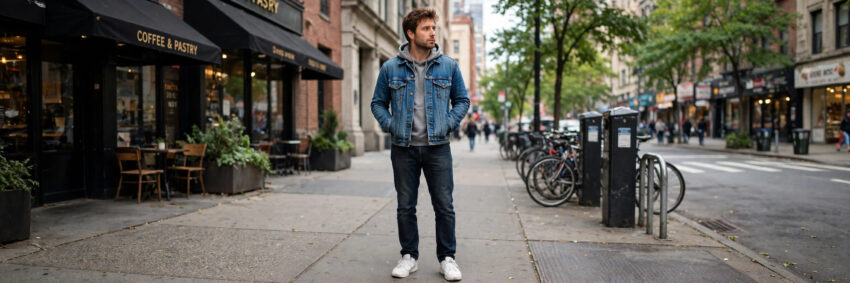
The denim jacket is the one piece of streetwear outerwear that almost everyone already owns, has owned, or has sitting in a cupboard waiting to be worn properly, and yet it is also the one most often worn by accident. People throw it over whatever they were already wearing, in whatever wash they happened to buy years ago, at whatever fit the rail offered, and then conclude that denim jackets look ordinary. They do not. A trucker worn with intent, in the right wash, at the right fit, with the layers and footwear chosen to answer it, is one of the sharpest, most repeatable outfits in a streetwear wardrobe. Worn without those decisions, it is just a blue layer. This guide is about the denim and trucker jacket only: where the Type III came from, how its five working washes behave, how to judge its fit with three simple checks, how to wear it with jeans without looking like a uniform, how to layer it over hoodies and under coats, what to put on your feet, and the mistakes that quietly cheapen it.
Start Here
For the wider outerwear picture, our ranking of streetwear jackets shows where the trucker sits among the other types, and the rotation in streetwear essentials covers the pieces it has to work with. Build complete looks from our streetwear outfit ideas for men, and if the layer underneath is doing the work, our guide to streetwear hoodies covers that layer in full.
Key Takeaways
- The Type III trucker dates to 1961 and was renamed the Trucker in 1967; its short body, chest pockets and button front are the pattern to look for.
- Five washes cover the rotation: light, mid, dark indigo, black and washed grey, and each one changes how formal and how seasonal the jacket feels.
- Fit is judged by three checks: the shoulder seam sits at the shoulder, the jacket buttons closed over a hoodie without pulling, and the sleeves end at the wrist bone.
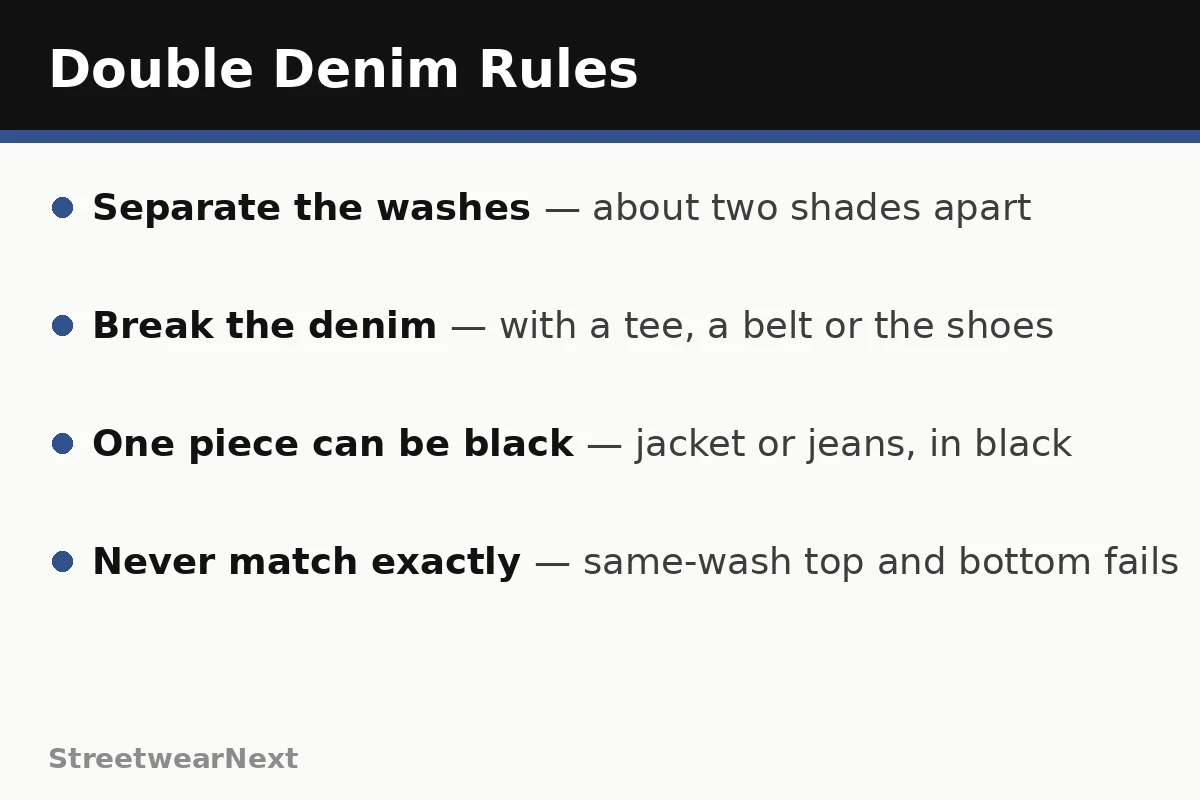
- Double denim works when the washes are separated clearly, about two shades apart, and the denim is broken with a tee, a belt or the shoes.
- Layer the trucker over a hoodie for weight and warmth, or under a longer coat so the denim shows as a structured middle layer.
- Chunky sneakers, plain boots and clean minimal shoes each suit a different wash; slight formal shoes fight the jacket’s character.
Contents
- The Jacket Itself: History and the Five Washes
- Fit: Shoulder, Button Test and Sleeve
- Double Denim Without the Uniform Look
- Layering: Over Hoodies, Under Coats
- Everyday Outfits: Tees, Shirts and the Top Half
- Footwear Pairings by Wash
- Mistakes That Cheapen the Jacket
- Our View
- Frequently Asked Questions
- Sources
- Recommended
The Jacket Itself: History and the Five Washes
The trucker you are buying today is a specific, dated design, not a generic denim layer, and knowing its shape is what lets you judge every version of it on the rail. The pattern settled in stages. Denim work jackets came first, cut short so they did not catch on machinery or a saddle, with a button front, a pointed collar and pockets placed high on the chest where they stayed usable while sitting. The design that fixed the modern template, covered in the history of the jean jacket, is the Type III: introduced in 1961, it added the two vertical seams running down from the chest pockets, the pointed pocket flaps and the slimmer, waist-length body that every trucker since has copied. In 1967 it was renamed the Trucker, and the name stuck to the whole category. That short body is not a styling quirk. It was built to end at the waistband of the jeans worn under it, which is why a trucker that hangs to mid-thigh never quite looks right, however good the denim is. The maker behind the pattern matters to the story too, since Levi Strauss and Company turned a work garment into a standard item of American dress across the twentieth century, and rival makers then built their own versions on the same bones. When you shop, shop the bones first: waist length, two chest pockets with flaps, seams running down from those pockets, metal shank buttons, and a collar that sits flat. Decorative variations come and go, but a jacket missing most of that list is a denim shirt with ambitions, and it will layer and age differently from the real thing.
The cloth itself explains the jacket’s behaviour, because denim is not just blue cotton. As the background on denim as a cotton twill sets out, it is a sturdy twill in which the coloured warp threads run over the white weft, which is why the inside of your jacket is paler than the outside and why the surface breaks in with wear instead of simply wearing out. The diagonal structure described in the account of twill weave and drape gives the cloth its particular combination of toughness and stiffness: a new trucker stands slightly away from the body, holds its collar shape and creases at the elbow and waist, and then, over months, those creases become your creases. That breaking-in period is part of the garment’s appeal and part of its fit problem, covered in the next section, because a jacket bought skin-tight on day one has nowhere to go as the cloth relaxes. Weight matters within the category. A heavier denim, around the weight used for jeans, holds the trucker shape through a full day and layers like real outerwear. The lightest summer versions drape more like a shirt, which can be exactly what you want in heat, but they lose the structured shoulder and the clean chest line that make the Type III read as a jacket at all. Read the composition the way you would for any hard-working garment: full cotton for the classic break-in, a small amount of stretch for comfort over layers, and nothing so synthetic that the surface shines.
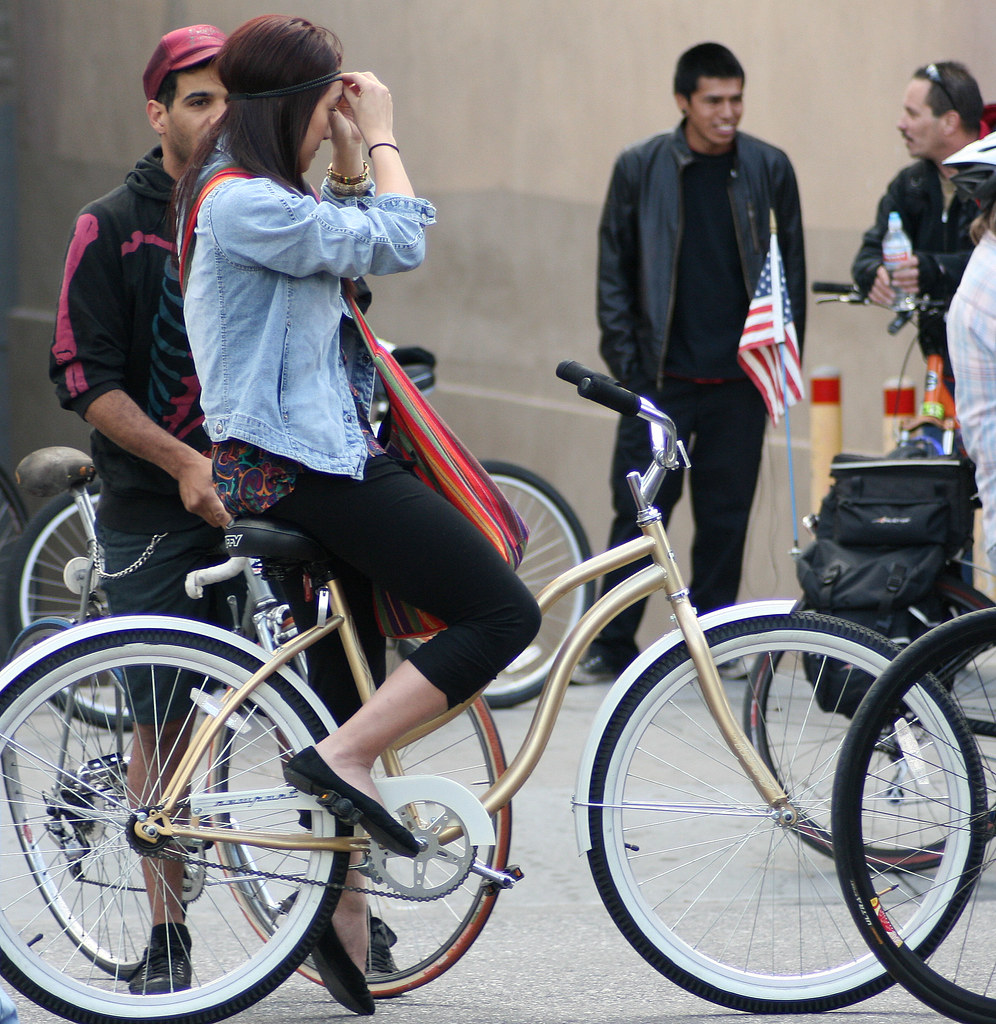
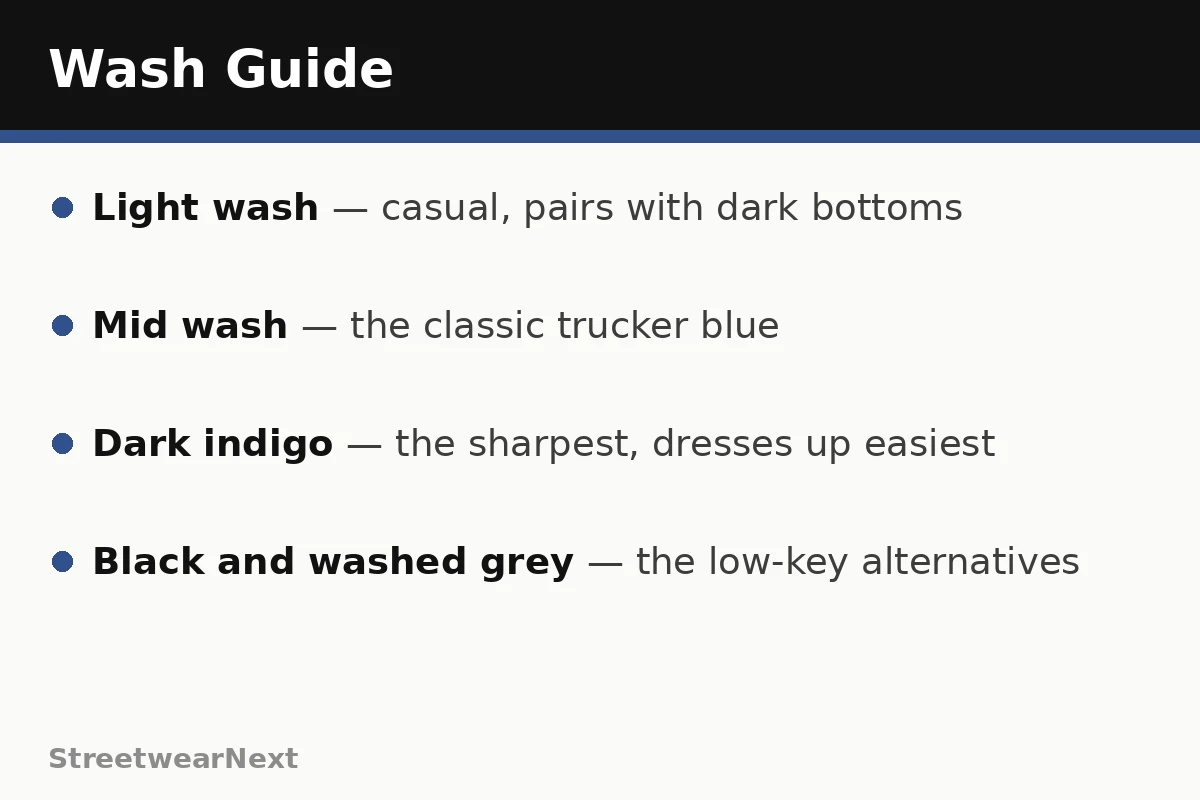
Colour on a denim jacket is wash, and wash is the single biggest decision in the whole outfit, because it decides what the jacket can sit beside. The blue itself comes from indigo dye and its fading, a dye that sits on the surface of the thread rather than soaking through it, which is why denim fades at the points of friction and why no two old jackets fade alike. Five washes cover a working rotation. Light wash is the palest blue, sun-faded in character, casual and summery, and the easiest wash to pair with dark jeans. Mid wash is the classic middle blue, the most versatile single purchase and the closest to the jacket’s workwear original. Dark indigo is deep, saturated and almost formal by denim standards; it keeps its colour longest, dresses up furthest and shows fading the most dramatically over time. Black denim is dyed or overdyed to a flat black or charcoal, reads the most modern of the five, and pairs where blue would clash. Washed grey sits between black and light blue, softer than either, and is the quietest option for anyone whose wardrobe already runs grey and white. The right one is the one clearly separated from the jeans you actually wear, a point the double-denim section returns to.
| Wash | Character | Best pairing | Season |
|---|---|---|---|
| Light | Pale, faded, most casual | Dark indigo or black jeans, white sneakers | Spring and summer |
| Mid | Classic middle blue, most versatile | Black jeans, chinos, grey trousers | Year round |
| Dark indigo | Deep and saturated, smartest blue | Grey or black bottoms, plain boots | Autumn and winter |
| Black | Flat black or charcoal, most modern | Washed black or grey jeans, minimal sneakers | Year round, best at night |
| Washed grey | Soft grey, quietest option | Black jeans, white tees, pale sneakers | Spring through autumn |
Use the table as a rotation plan rather than a ranking. If you own one trucker, make it mid wash or dark indigo, because those two sit beside the widest range of bottoms without a colour argument. If you own two, separate them properly, a blue and a black, or a light and a dark, so each one opens outfits the other cannot. Two jackets in neighbouring washes are one jacket bought twice. Finally, treat fading as a feature with a timeline. A dark indigo trucker is a long project: it will look almost new for a year and better every year after. A light wash jacket arrives already at its destination and changes little. Buy the timeline you will actually enjoy wearing through, not the photograph of someone else’s five-year-old jacket.
Fit: Shoulder, Button Test and Sleeve
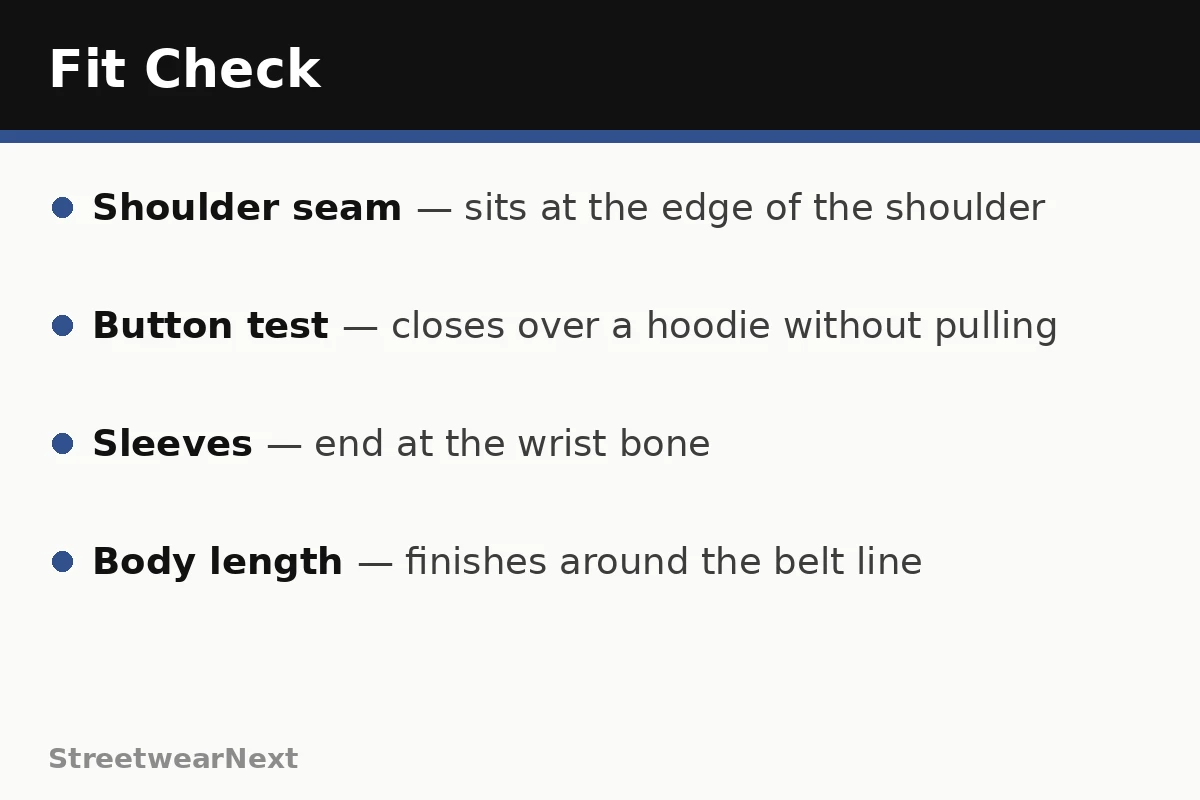
A trucker fits correctly or it does not, and three checks in the shop will tell you which, faster and more honestly than any size label. The first check is the shoulder seam. On a correctly fitting trucker, the shoulder seam sits at the shoulder, right where your own shoulder ends and the arm begins. If the seam drops down the upper arm, the jacket is oversized in a way that reads accidental on this garment, because the trucker’s short, boxy body has no length to carry extra width the way a long coat can. If the seam rides up onto the top of the shoulder, the jacket is too small, and every other check will fail behind it. The second check is the button-over-hoodie test, and it is the most useful of the three because it tests the jacket against your real life rather than against a tee. Put on a mid-weight hoodie, put the jacket over it, and button the jacket closed. It should close without pulling, without the buttons straining sideways and without the chest gaping between them. A trucker you cannot button over a hoodie is a jacket that only works in one thin outfit, and it will spend most of the year unworn. The third check is the sleeve. The sleeves should end at the wrist bone, with your arms hanging naturally. Shorter than that and the jacket looks outgrown every time you reach for anything. Longer, and the denim bunches over the hand, hides the watch and the cuff, and makes the whole garment look borrowed.
Body length and body width follow from those three checks rather than replacing them. The classic trucker body ends at the waistband or just below it, covering the belt line and no more, because the design was cut to sit over the top of jeans rather than over the hips. Length well below the waistband is the more common fault in modern versions, and it blurs the design into a denim overshirt. Through the body, the fit should be close without being tight. You should be able to pinch a small amount of cloth at the side, raise both arms without the whole jacket lifting off your shoulders, and sit down buttoned without the hem riding up and digging in. Denim relaxes a little with wear, softening at the chest, elbow and waist, but it does not stretch like a knit, so do not buy a size down expecting the cloth to give you the missing room. It will give you millimetres, not a size, and the shoulder seam will still be in the wrong place at the end of it.
Sizing between brands is inconsistent enough that the checks matter more than the letter on the label, and your intended layering decides which end of your size range to choose. If the trucker is mainly a spring and summer jacket worn over tees and shirts, the closer fit that passes the button test over a shirt is the right one, and it will look sharpest open, which is how it will mostly be worn. If it is an autumn layer that has to work over hoodies and under coats, choose the fit that passes the button-over-hoodie test with a little room to spare, and accept that it will sit slightly easier over a tee. What you should not do is size up twice to chase an oversized look. A standard trucker sized up twice is just a large jacket: the shoulder seam slides, the sleeves pass the wrist bone and keep going, and the chest pockets drop out of position. If you want that silhouette, buy a trucker cut oversized on purpose, where the proportions were rebalanced by the designer, and judge it by the same three checks.
Double Denim Without the Uniform Look
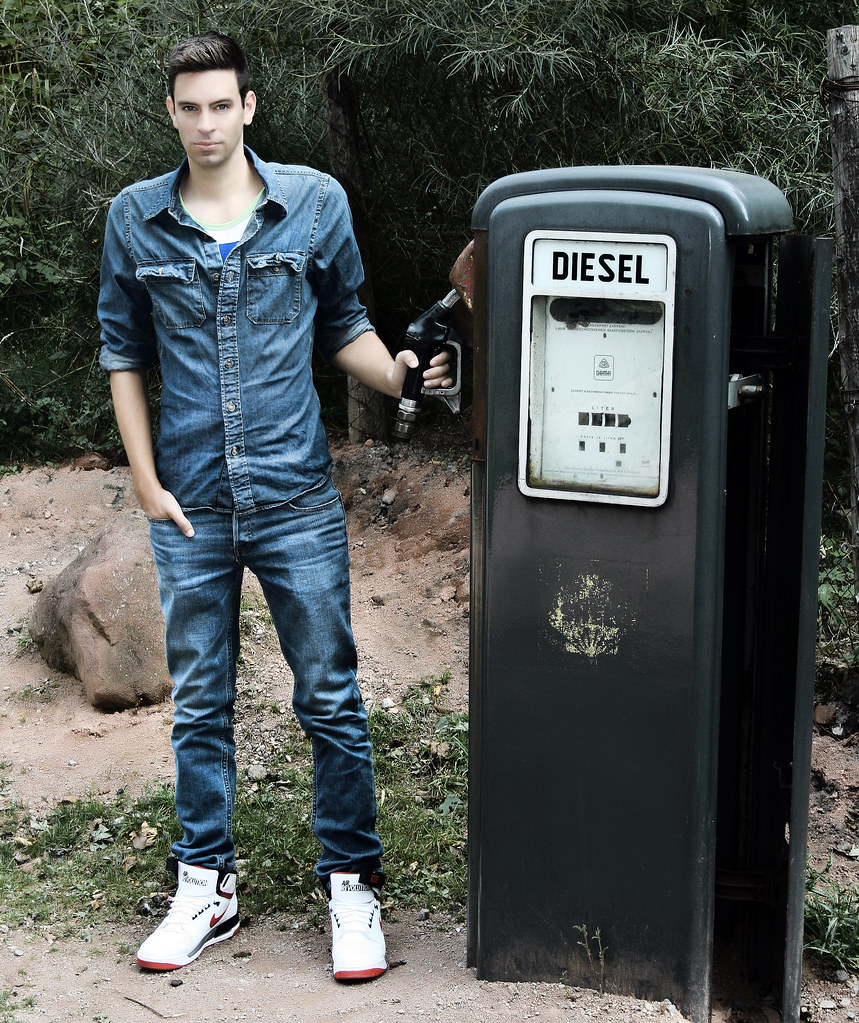
Double denim fails for one reason only, and it is not that denim is worn with denim; it is that the two denims are too close to each other to read as a choice. The rule is simple to state and easy to apply in front of a mirror. Separate the washes clearly, about two shades apart, so the jacket and the jeans are obviously different colours. A dark indigo trucker over light wash jeans, a light trucker over dark indigo jeans, a black trucker over washed grey or faded blue jeans: each of those reads as two garments chosen to work together. A mid wash trucker over mid wash jeans in a near-identical blue reads as a suit that nobody designed, and the eye goes looking for the uniform it belongs to. The history underneath the pairing is ordinary working dress, since jeans as durable work trousers and the jacket above them were worn together on farms, ranches and factory floors long before fashion had an opinion about it, and the workwear pairing looked right then for the same reason it looks right now: the pieces were usually at different stages of wear, and therefore different shades. Matching a brand-new jacket to brand-new jeans in the same wash removes exactly that difference, which is why the newest double-denim outfits are the ones that most often miss.
The second half of the rule is the break. Even with the washes separated, a head-to-toe field of denim needs interrupting, and the outfit should break the denim with a tee, a belt or the shoes, ideally two of the three. A white, black or grey tee visible at the open front of the jacket splits the blue into two pieces and gives the eye a rest between them. A belt in brown or black leather does the same job at the waist, marking exactly where the jacket ends and the jeans begin, which is the boundary the matching-wash outfit loses. Footwear finishes the break at the ground: white sneakers, brown boots or any shoe that is plainly not denim closes the outfit in a different material. Our guide to streetwear jeans covers the bottom half in full, and it is worth using it for the jean fit itself, because double denim also fails on proportion when both halves are the same width. A boxy trucker over a relaxed jean can look like a column, while the same jacket over a straight or slim jean keeps a shape. Match the volumes deliberately, one relaxed piece at a time, and let texture help you as well: a rigid, darker jacket over a softer, faded jean separates the pieces by hand feel and sheen even before the colour difference registers.
When in doubt, use the safest combinations first and experiment from solid ground. Dark indigo trucker, white tee, light wash jeans and white sneakers is the reference outfit in this category, because every element separates the next: dark above, bright in the middle, pale below, clean at the ground. Black trucker, grey tee, washed blue jeans and black boots runs the same logic in a darker register and is the easiest evening version. The combination to treat with care is blue on blue at similar depth with a denim shirt anywhere near it, because a third denim piece removes every break at once. If you wear a denim shirt, wear it as the layer under a different jacket, not as the filling in a denim sandwich. Accessories can carry part of the break as well, and the caps, belts and bags in our guide to streetwear accessories are the obvious place to find a leather or canvas piece that interrupts the blue without adding another loud garment. Judge the finished outfit from across the room, not at mirror distance. At mirror distance you can see the stitching and convince yourself the washes differ. Across the room is how everyone else sees you, and if the jacket and jeans merge into one blue shape at that distance, they are too close, whatever the labels called them.
Layering: Over Hoodies, Under Coats
The trucker earns its place in a cold-weather wardrobe as a middle layer, structured enough to hold an outfit together under a coat and easy enough to sit over a hoodie without a fight. Start with the layer underneath, because it is the one people get wrong by thickness. The hoodie as a hooded sweatshirt is the trucker’s natural partner: the hood sits outside the jacket collar at the back, the body fills the denim’s boxy frame, and the two garments share a workwear and skate lineage that makes them look related rather than stacked. The rules are mechanical. The hoodie should be mid-weight, not a thick oversized blanket of fleece, or the jacket will not close and the sleeves will bind at the elbow. Its hem should end near the jacket’s hem, not hang six inches below it, and its hood should be worn out, over the collar, every time, because a hood trapped inside the jacket bunches at the neck and pushes the collar up around your ears. Colour follows the wash logic from earlier: a grey hoodie under a mid or dark blue trucker, a black hoodie under black or light wash denim, a white hoodie under almost anything blue. This is the outfit our cold-weather guide to how to style a hoodie in winter builds on, and the trucker version of it works from the first cold morning of autumn until spring, with the jacket open on milder days and buttoned over the closed zip or pullover when the wind gets into it.
Wearing the trucker under a coat reverses the job. Now the denim is the structure in the middle of the outfit, giving a long, soft outer layer a firm centre and a visible collar, chest pockets and button line at the opening. The coat needs to be longer than the jacket by a clear margin, an overcoat, a parka or a long puffer that ends at mid-thigh or the knee, so the short denim body reads as a deliberate layer ending at the waist rather than as a coat that shrank. Button the trucker and leave the coat open, and the outfit gains a panel of denim down its centre that does the same visual work as a waistcoat in a tailored outfit, without any of the formality. Keep the layer under the trucker thin in this arrangement, a tee or a fine crew neck, because three thick layers at the chest will strain the coat’s closure and round out the silhouette. The colour logic is forgiving: mid and dark indigo under camel, grey, black or olive coats, black denim under grey and black coats where blue would argue, light wash reserved for spring coats and lighter outers. The complete cold-weather formulas in our streetwear outfit ideas for men in winter show how these longer layers are balanced, and the trucker slots into them as the piece that stops a big coat and a plain hoodie looking like two garments having an argument about which season it is.
Between those two arrangements sits the everyday one, the trucker as the outer layer over shirts and knits. Over a plain tee, the jacket is the outfit’s structure, and it should be buttoned at one or two middle buttons at most, or worn fully open, never buttoned to the top with the collar closed. Over a crew neck knit, the jacket adds the collar and hardware the knit lacks, and this is where dark indigo earns its keep, sitting over grey, burgundy or cream knitwear with a neatness the lighter washes cannot match. In every arrangement, watch the hems as a set. The outfit reads cleanly when the layers end at different, deliberate points: tee at the waistband, jacket just below it, coat well below that. When two layers end at exactly the same point, they merge into one thick band, and the outfit loses the stepped outline that makes layering look like layering rather than bulk.
Everyday Outfits: Tees, Shirts and the Top Half
Once fit, wash and layering are settled, the trucker becomes one of the easiest jackets in the wardrobe to build a week of outfits around, because the top half underneath it can stay almost boringly simple. That simplicity has roots in the garment’s first life, since the world of workwear and its durable clothing paired the denim jacket with whatever plain shirt the day required, and the modern streetwear version keeps the same contract: the jacket carries the texture, the stitching and the hardware, so the piece under it carries the colour and little else. A white tee under a mid wash trucker with black jeans is not a lack of imagination. It is the reference outfit for the category, repeated because every element is doing exactly one job. A black tee under a light wash jacket reverses the contrast and works the same way. Grey marl under dark indigo softens the whole thing for daytime. Graphic tees need a decision: a small chest print that shows at the open front is a detail, while a large print half-hidden by a buttoned jacket is a picture with a frame cutting through it.
Shirts and smarter pieces widen the jacket’s range further than most people expect, and this is where dark indigo and black do their best work. A dark indigo trucker over a plain white or pale blue shirt, with the shirt tucked into grey trousers or clean black jeans, is as dressed as denim gets, and it holds up in the broad middle ground of modern dress codes where a blazer would be too much and a hoodie too little. A black trucker over a black tee with black jeans is a legitimate all-black outfit rather than a failure of imagination, provided the denims differ in fade and texture so the pieces stay separate, a point the wider world of streetwear as a style movement has relied on for years, building whole looks out of one colour separated by fabric and finish. Keep the shirt collar inside the jacket collar, keep the shirt hem either fully tucked or fully out and longer than the jacket only by design, and avoid the half-tucked shirt under a buttoned trucker, which gives the outfit two unfinished middles.
Footwear Pairings by Wash
The trucker ends at the waist, so it never touches the shoe, and yet the shoe still decides whether the outfit underneath it looks finished, because footwear sets the register the whole look is read in. The default pairing is the sneaker, and the long shared history of sneakers as everyday footwear and denim is why the combination almost never looks wrong. White low-top sneakers are the safest shoe in this entire guide: they break double denim at the ground, they clean up light and mid wash outfits, and they keep dark indigo from reading too heavy in spring. Chunky sneakers and retro runners add volume at the base of the outfit, which suits relaxed and wide jeans under the jacket and gives slimmer outfits a grounded finish. High-tops sit naturally with the trucker’s cropped body and narrower jeans, filling the ankle where a short jacket and a slim leg might otherwise leave the outfit looking pinched at both ends. Keep the shoe quiet when the jacket or the jeans are busy, and let the shoe carry the colour only when everything above it is plain denim and a plain tee.
Boots are the second register, and they move the outfit toward the jacket’s working origins. A plain brown or black leather boot under dark indigo or black denim, with straight or slim jeans, is the strongest autumn outfit in this guide, because the boot’s weight answers the denim’s weight and the whole look reads as one decision. Suede desert boots and Chelsea boots soften that into something smarter, pairing best with dark indigo and black jackets and with trousers or clean jeans rather than faded denim, where their neatness argues with the fade. Heavy work boots and hiking boots need care: they double the workwear reference the jacket already makes, and the outfit tips toward costume in the same way double camouflage does, one reference too many at full volume. Minimal leather sneakers and clean suede shoes occupy the smart end for the dark washes, and they are as formal as footwear under a denim jacket should go. Loafers, dress shoes and anything with a polished shine ask for tailoring the trucker does not offer, and the combination reads as two dress codes sharing a body. Sandals and slides sit outside the pairing altogether, since a jacket built for work and weather over an open summer shoe strands the outfit between seasons in both directions at once.
Mistakes That Cheapen the Jacket
Most denim jacket mistakes are not buying mistakes; they are small daily decisions that undo a good jacket, and they are all fixable in the mirror before you leave the house. The first is the wash collision, covered in the double-denim section and worth repeating as an error in its own right: jacket and jeans at the same depth of blue, no break piece, no belt, denim-toned shoes. It is the single most common reason people conclude they cannot wear the jacket they own. The second is the fit that was bought for a different plan, the jacket sized for tees worn straining over a hoodie all winter, or the jacket sized for layers hanging loose and collar-deep over every summer tee. The third is buttoning it wrong. Buttoned to the throat with the collar up, a trucker reads as defensive. Buttoned only at the very bottom button, it pulls and twists. Open, or held by one or two middle buttons, is where the design sits naturally, because that is how the front was patterned to hang. The fourth is neglecting the cloth. Denim does not need frequent washing, and hot, frequent washes strip indigo unevenly and soften the structure the jacket depends on, but a jacket that is never cleaned at all stiffens with dirt at the collar and cuffs and starts to look neglected rather than broken in. Wash it cold, inside out, rarely, and let it dry flat or on a hanger so the body keeps its shape.
The quieter mistakes live in the styling around the jacket. A denim jacket covered in pins, patches and badges can be a genuine personal piece, built up over years, but the same coverage bought ready-made or added in one weekend reads as decoration applied to a garment that already has stitching, hardware and fade doing that job, and the wider roundups in streetwear coverage at Complex return to the same lesson across categories: the strongest versions of classic pieces are usually the least decorated ones. Over-accessorising works the same way at outfit level. A trucker, a denim shirt, a bandana, work boots and a wallet chain is a theme, and themes are for parties. Keep one reference strong and the rest of the outfit ordinary, the same subtraction rule that governs double denim and boots. The last mistake is treating the jacket as seasonless filler, worn over everything from a vest top in August to a thick knit in January, and judged harshly when it flatters neither. It has a real range, roughly from a tee in spring to a hoodie and a coat in winter, and inside that range it is one of the most reliable garments in the wardrobe. The broader guides to streetwear for men build whole rotations on exactly that kind of reliability, a few well-fitting, well-understood pieces worn in combinations that were decided on purpose. The trucker rewards that treatment more than most, because its design was settled in 1961 and has had sixty years to be proven. Wear it at the right fit, in a wash separated from what is under it, and it will not be the jacket that lets the outfit down.
Our View
Our view is that the denim jacket is not a basic to be owned but a pattern to be understood, and once you understand the Type III, its washes and its three fit checks, you will never buy or wear one by accident again. Separate the wash from your jeans, break the denim, layer it with intent, and the trucker stops being the blue layer in the cupboard and becomes the jacket the rest of the wardrobe gets built around.
Buy the trucker by its checks, not its label: seam at the shoulder, buttons closed over a hoodie, sleeves at the wrist bone, and a wash two shades from your jeans.
— Brian Ka
Frequently Asked Questions
What is a Type III trucker jacket?
The Type III is the pattern introduced in 1961 that fixed the modern denim jacket: a waist-length body, two chest pockets with pointed flaps, vertical seams running down from those pockets and a button front. It was renamed the Trucker in 1967, and almost every denim jacket sold today follows its pattern.
How should a denim jacket fit?
Judge it by three checks. The shoulder seam should sit at the shoulder, the jacket should button closed over a hoodie without pulling or gaping, and the sleeves should end at the wrist bone with your arms hanging naturally. The body should end at or just below the waistband.
Can I wear a denim jacket with jeans?
Yes, if the washes are separated clearly, about two shades apart, such as a dark indigo jacket over light jeans or a light jacket over dark jeans. Break the denim with a tee in a different colour, a leather belt or non-denim shoes so the two pieces read as a choice rather than a uniform.
Which denim jacket wash is most versatile?
Mid wash is the most versatile single purchase, with dark indigo close behind. Mid wash sits beside black, grey and most blue jeans without a wash collision, while dark indigo dresses up furthest and fades the most dramatically over time. Black is the most modern option and the easiest to wear at night.
Can I wear a denim jacket under a coat?
Yes. Wear the trucker buttoned as a structured middle layer under a coat that is clearly longer, such as an overcoat, parka or long puffer, and keep the layer under the jacket thin. The denim panel showing at the open front of the coat adds structure and a collar line to the outfit.
Questions About Building Your Wardrobe?
Trying to find the right wash or fit in a trucker, or working out whether your jacket and jeans are too close in colour? Send us your questions and we will point you in the right direction.
Sources
- Wikipedia — Jean Jacket
- Wikipedia — Levi Strauss & Co.
- Wikipedia — Denim
- Wikipedia — Twill
- Wikipedia — Indigo Dye
- Wikipedia — Jeans
- Wikipedia — Hoodie
- Wikipedia — Workwear
- Wikipedia — Streetwear
- Wikipedia — Sneakers
- Complex — Style