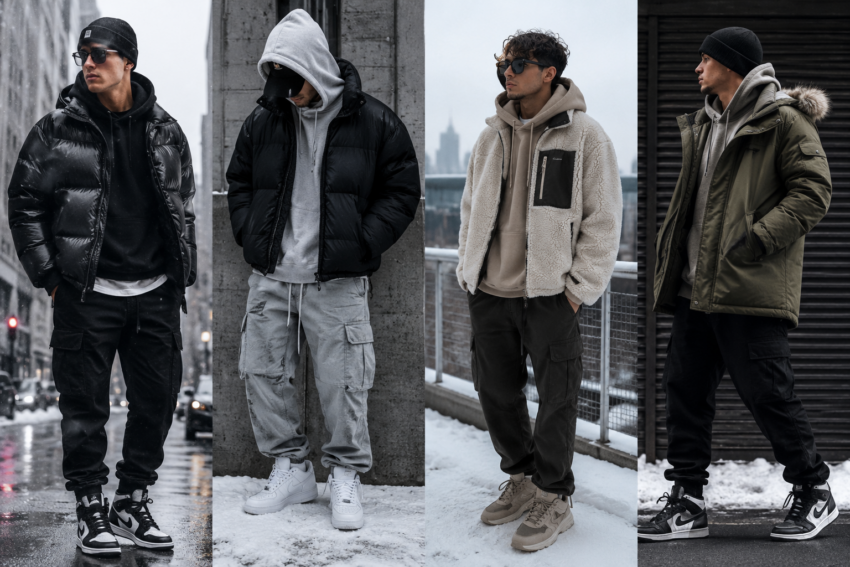
Winter is where streetwear dressing gets genuinely interesting. The cold forces a level of layering and outerwear consideration that other seasons do not require, and that necessity creates opportunities for visual complexity and depth that summer and spring cannot match. The best winter streetwear outfits are the ones that solve the practical problem of staying warm while simultaneously looking like the warmth was never the primary concern — as if the layers were assembled for aesthetic reasons first and thermal ones second, even when the reality is exactly the opposite.
This is the particular skill that separates men who dress well in winter streetwear from those who simply put on enough clothes to survive the cold. Understanding how to layer with intention, how to choose outerwear that carries streetwear credibility, and how to maintain a coherent silhouette across multiple layers of clothing gives you the tools to build winter streetwear outfits that work as well aesthetically as they do practically.
The Winter Streetwear Layering System
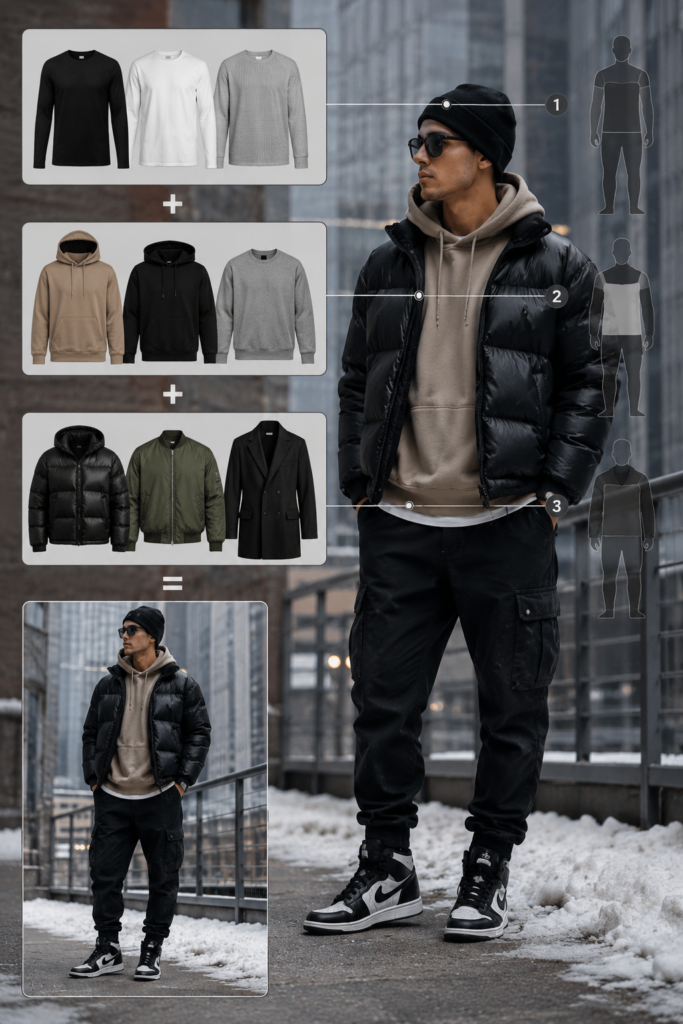
Every successful winter streetwear outfit is built on a layering system — a considered sequence of pieces that work together to provide warmth, visual depth, and a coherent overall silhouette. Understanding the logic of this system makes building winter outfits significantly easier because it gives you a framework for making decisions at each layer.
The base layer is the foundation. In a winter streetwear context, the base layer is typically a thermal, a long-sleeve tee, or a lightweight crewneck — something worn directly against the skin that provides a warm foundation without adding significant bulk. The base layer is often partially visible in a finished winter outfit, peeking out at the cuffs or collar of upper layers, which means it is worth choosing something that looks good rather than treating it as purely functional.
The mid layer is where the personality of the outfit lives. In summer, the tee or hoodie carries the personality work. In winter, the mid layer — typically a hoodie, a heavyweight crewneck, or a knit sweater — does the same job while also contributing significantly to the warmth of the overall system. A quality heavyweight hoodie is the most natural mid layer in a winter streetwear outfit, and it is explored in depth in Best Hoodies for Men.
The outer layer is the outerwear — the piece that the world sees first and that sets the initial impression of the overall outfit. In winter streetwear, outerwear choices range from puffer jackets and bomber jackets to structured overcoats and technical shells, and each creates a very different aesthetic mood even when the layers underneath are identical.
Puffer Jacket Winter Streetwear Outfits
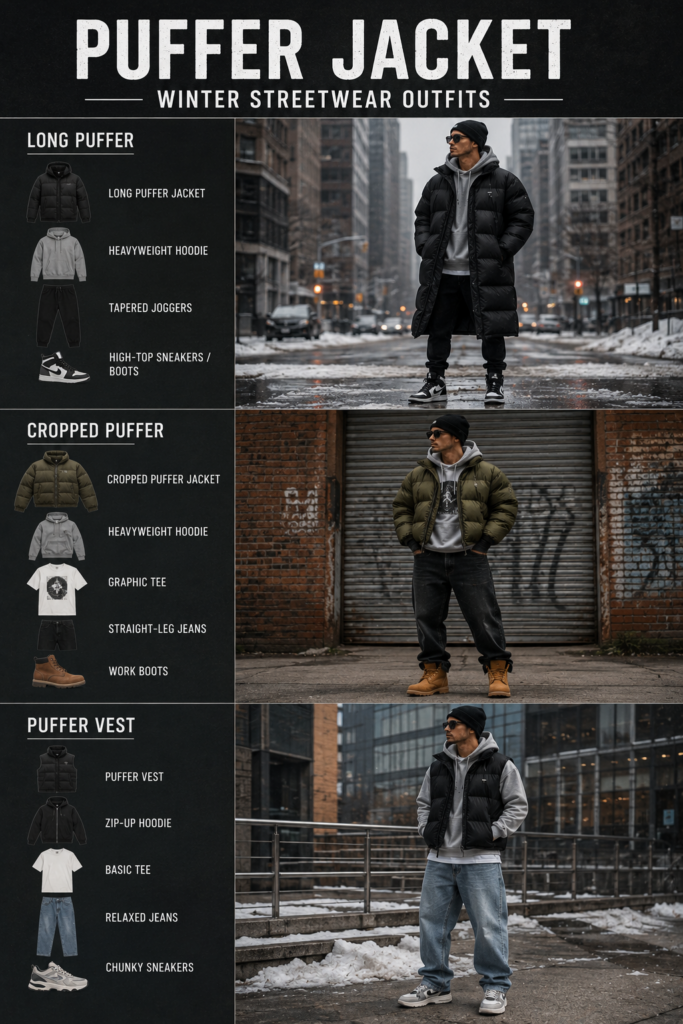
The puffer jacket is the outerwear piece most associated with winter streetwear, and its dominance in the aesthetic is well-earned. It provides genuine warmth without sacrificing mobility, it has deep roots in hip-hop and urban culture that give it streetwear credibility, and it comes in a wide enough range of silhouettes and colors that it works across many different personal aesthetics within the broader streetwear umbrella.
A long puffer jacket — hitting at the knee or below — worn over a heavyweight hoodie with tapered joggers and chunky sneakers or high-top boots is one of the strongest winter streetwear outfits available. The length of the puffer creates a dramatic silhouette that feels fashion-forward without being impractical, and the hoodie visible at the neck and cuffs adds a familiar streetwear layer underneath. Keep the color palette restrained — a black long puffer over a grey hoodie with black joggers is a monochromatic combination that lets the silhouette do the work without color competing for attention.
A cropped puffer jacket worn over a graphic tee and heavyweight hoodie with straight-leg jeans and work boots is a more casual, proportionally interesting winter combination. The cropped puffer sits at the hip, which creates a shorter silhouette at the top that balances well against the straight-leg jean and substantial boot below. This combination works particularly well in earth tones — an olive or tan cropped puffer over a grey hoodie with dark jeans and brown boots is a cohesive, grounded winter outfit.
A puffer vest worn over a heavyweight zip-up hoodie with relaxed jeans and chunky sneakers is a layering combination that uses the vest to add warmth to the core without restricting movement at the arms. The zip-up hoodie provides sleeve coverage and the familiar streetwear silhouette while the vest adds a visual layer and practical warmth at the torso. This combination works particularly well in cold but not extreme winter conditions where a full puffer jacket would feel excessive.
Overcoat Winter Streetwear Outfits
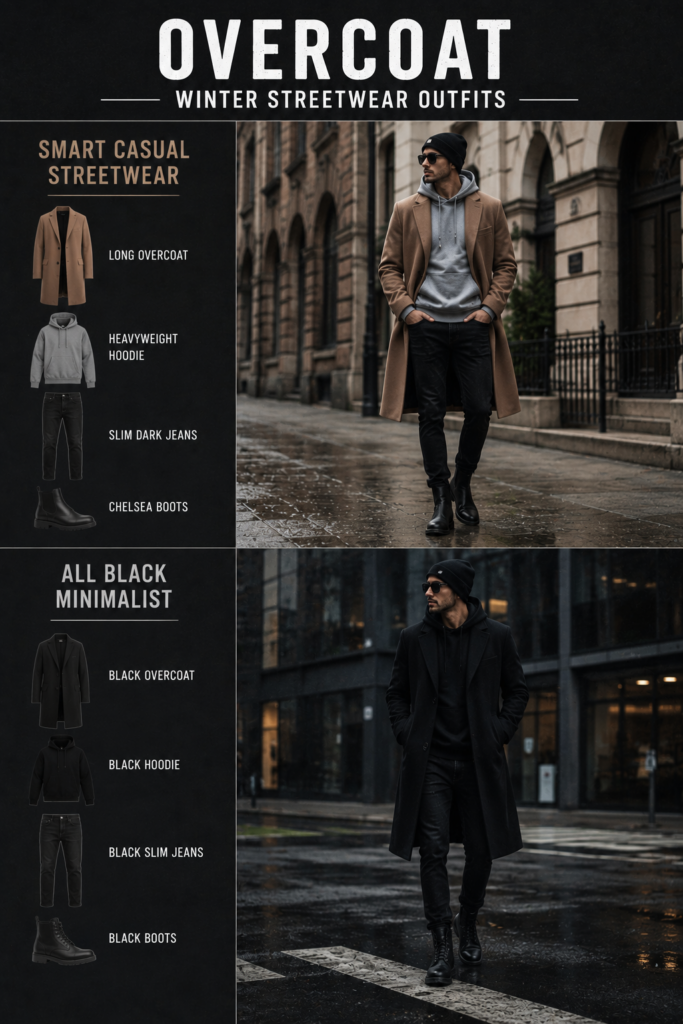
The structured overcoat is the most elevated outerwear option in winter streetwear, and its contrast with the casual pieces worn underneath is precisely what makes it so effective. When a man in a well-cut overcoat steps out and reveals a graphic hoodie and joggers underneath, the combination of the formal and the casual creates a tension that feels genuinely interesting and deliberate.
A long camel or charcoal overcoat worn over a plain grey heavyweight hoodie with slim dark jeans and Chelsea boots is a winter outfit that sits confidently at the intersection of streetwear and smart-casual dressing. The overcoat does the work of elevating the overall impression while the hoodie and jeans maintain the casual foundation. This combination works in a wider range of contexts than most streetwear outfits — creative workplaces, casual dinners, urban exploration — because the overcoat provides enough formality to make the hoodie feel like a deliberate choice rather than a default.
A black structured overcoat worn over a black hoodie and black slim jeans with black boots is an all-black winter outfit that uses the different textures of wool, fleece, and denim to create visual interest within a monochromatic palette. The absence of color shifts the focus entirely to silhouette and texture, which rewards the quality and fit of each individual piece. This is a combination that photographs exceptionally well and has a sharp, fashion-forward quality that few other winter streetwear outfits can match.
Bomber and Coach Jacket Winter Layering
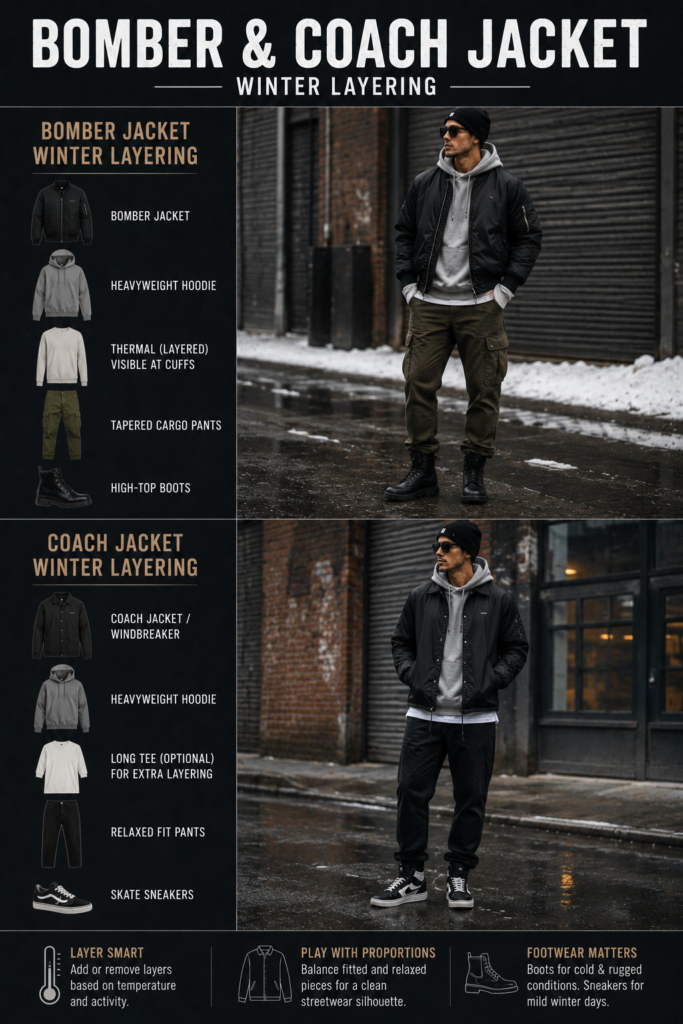
The bomber jacket and the coach jacket both have strong streetwear heritage that makes them natural outerwear choices in winter, though their lighter construction means they work best as part of a more comprehensive layering system rather than as standalone outer layers in genuinely cold conditions.
A bomber jacket worn over a heavyweight hoodie with a thermal visible at the cuffs, paired with tapered cargo pants and high-top boots, creates a winter streetwear outfit that uses layering to solve the warmth problem while maintaining a strong aesthetic. The thermal at the cuffs adds a subtle layered detail that rewards closer inspection, and the cargo pants and boots ground the outfit with a utilitarian solidity that feels appropriate for winter conditions.
A coach jacket or windbreaker worn as an outer layer over a heavyweight hoodie in mild winter conditions is a lighter variation that works in climates where full winter outerwear is not always necessary. The coach jacket adds a sport-influenced layer over the hoodie while keeping the overall silhouette relatively slim — a useful characteristic in winter layering where bulk can quickly become a problem.
Winter Streetwear Bottom Options
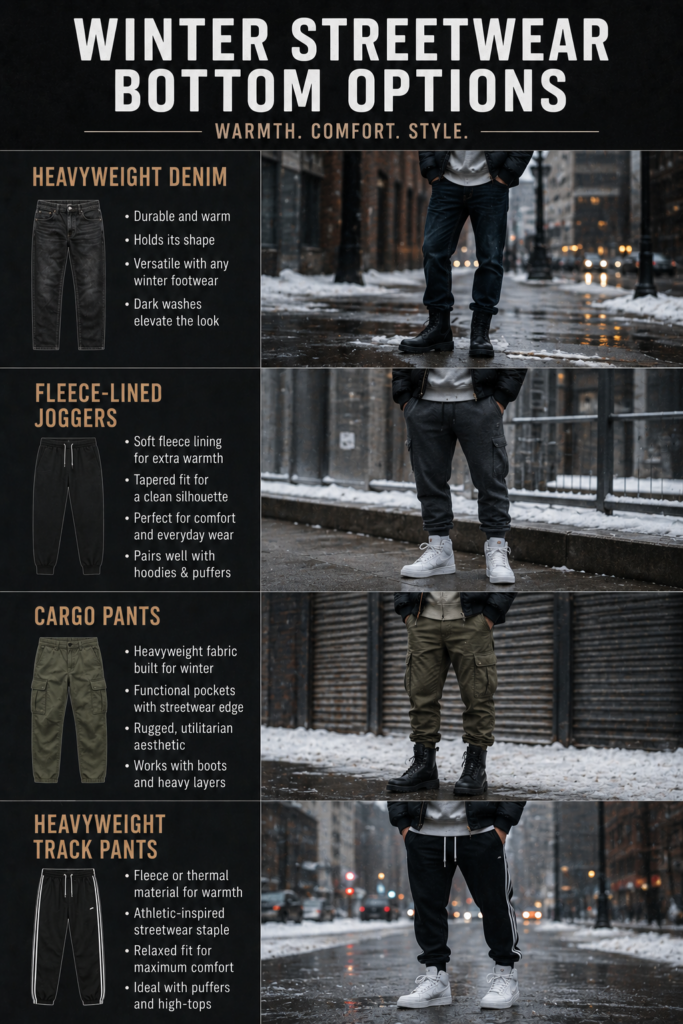
The bottom half of a winter streetwear outfit requires its own consideration because cold weather changes what is practical as well as what looks good. Shorts and lightweight pants that work in summer are not viable options in genuine winter conditions, which narrows the field in productive ways.
Heavyweight denim is one of the strongest winter bottom options in streetwear because it provides significant warmth and structure while maintaining the familiar, versatile quality that makes jeans a year-round wardrobe staple. Dark wash straight-leg or slim jeans with a heavyweight construction work naturally under puffer jackets and overcoats and pair with the widest range of winter footwear options.
Fleece-lined or thermal joggers bring the comfort and streetwear aesthetic of the standard jogger into winter territory by adding an internal layer of warmth that makes them genuinely practical in cold conditions. A pair of fleece-lined tapered joggers with a heavyweight hoodie and puffer jacket is a winter streetwear outfit that prioritizes comfort and warmth without sacrificing the visual coherence of the look.
Cargo pants in a heavier fabric — thick cotton twill or a cotton-nylon blend — work naturally in winter streetwear because their utilitarian heritage aligns with the functional demands of cold weather dressing. A heavyweight cargo pant in olive or black with a structured hoodie and a puffer or overcoat is a winter combination that feels grounded and considered.
Track pants in a heavyweight or fleece-lined construction are the warmest version of the athletic bottom in a winter streetwear context. A pair of heavyweight track pants with a long puffer jacket and high-top boots creates a winter outfit that is genuinely warm and firmly in streetwear territory.
Winter Streetwear Footwear
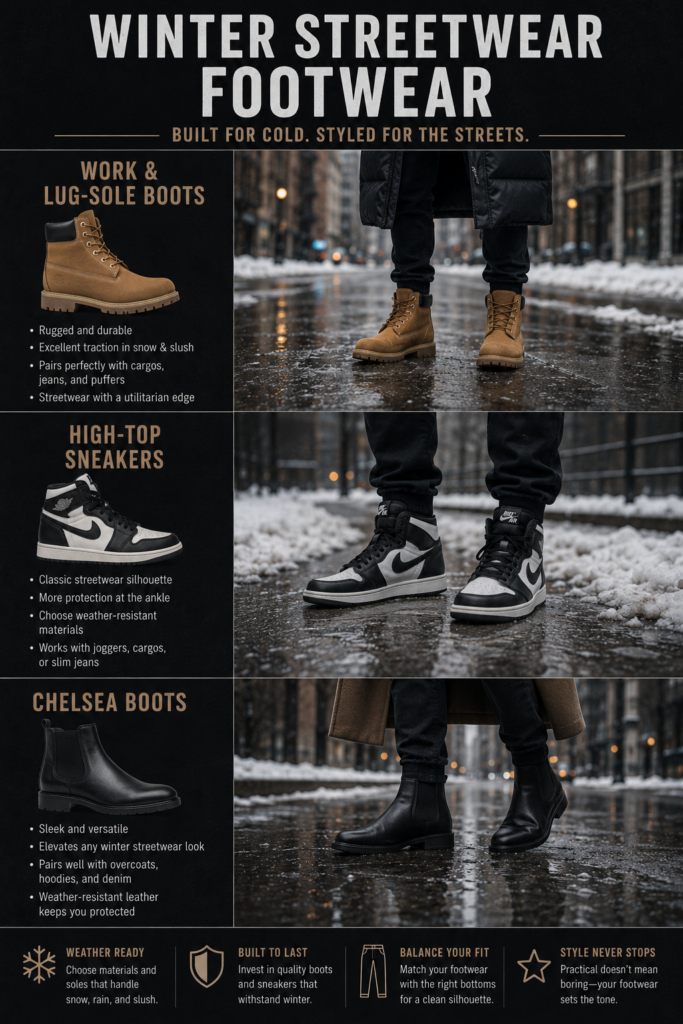
Footwear in winter streetwear needs to balance aesthetic considerations with practical ones in ways that other seasons do not require. Clean white sneakers that work perfectly in summer become impractical in snow and slush, while boots and weather-resistant footwear that are necessary in genuine winter conditions need to carry enough streetwear credibility to work within the aesthetic.
Work boots and lug-sole boots are the strongest winter footwear option in streetwear because they provide genuine weather protection and durability while also carrying a utilitarian, rugged aesthetic that aligns naturally with streetwear’s functional roots. A clean pair of work boots in black or brown worn with tapered jeans or cargo pants and a heavyweight hoodie under a puffer jacket is a winter streetwear outfit where every element — including the footwear — feels intentional and appropriate for the conditions.
High-top sneakers with thick soles offer a compromise between the sneaker aesthetic that is central to streetwear culture and the practical demands of winter dressing. A chunky high-top in a weather-resistant construction — suede, canvas with water-resistant treatment, or a synthetic upper — provides more protection than a standard low-top sneaker while maintaining the familiar streetwear silhouette at the ankle.
Chelsea boots in a leather or rubber construction are the most polished footwear option for winter streetwear and work particularly well alongside overcoats and more elevated layering combinations. A clean leather Chelsea boot in black or dark brown adds a sophisticated finishing detail to a winter streetwear outfit that feels consistent with the elevated quality of the outerwear above it.
Winter Streetwear Color Strategy
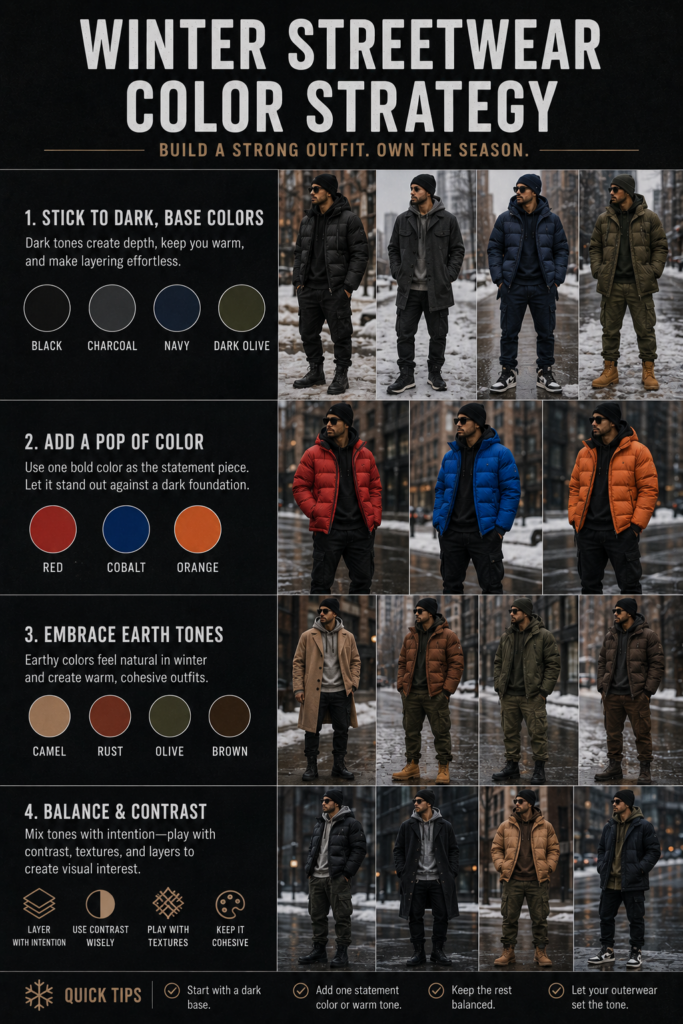
Winter naturally encourages a darker, more restrained color palette, and this tendency aligns well with the visual logic of streetwear layering. Dark colors — black, charcoal, navy, and dark olive — absorb warmth and create a sense of depth and weight that feels appropriate for the season. They also make layering easier because darker pieces in the same color family tend to work together naturally without requiring precise matching.
That said, winter streetwear does not need to be uniformly dark. A bright hoodie or a bold outerwear piece worn within an otherwise dark outfit creates a strong focal point that feels deliberate and energetic. A red, cobalt, or orange puffer jacket over a black hoodie and black jeans uses the outerwear as the single statement piece within a monochromatic foundation — a combination that is visually striking without being complicated.
Earth tones feel particularly natural in winter because their warmth and groundedness aligns with the visual quality of the season. Camel, rust, olive, and brown in layered combinations create a cohesive, considered winter streetwear aesthetic that feels genuinely seasonal without requiring any deliberate seasonal theming.
Winter Streetwear Accessories
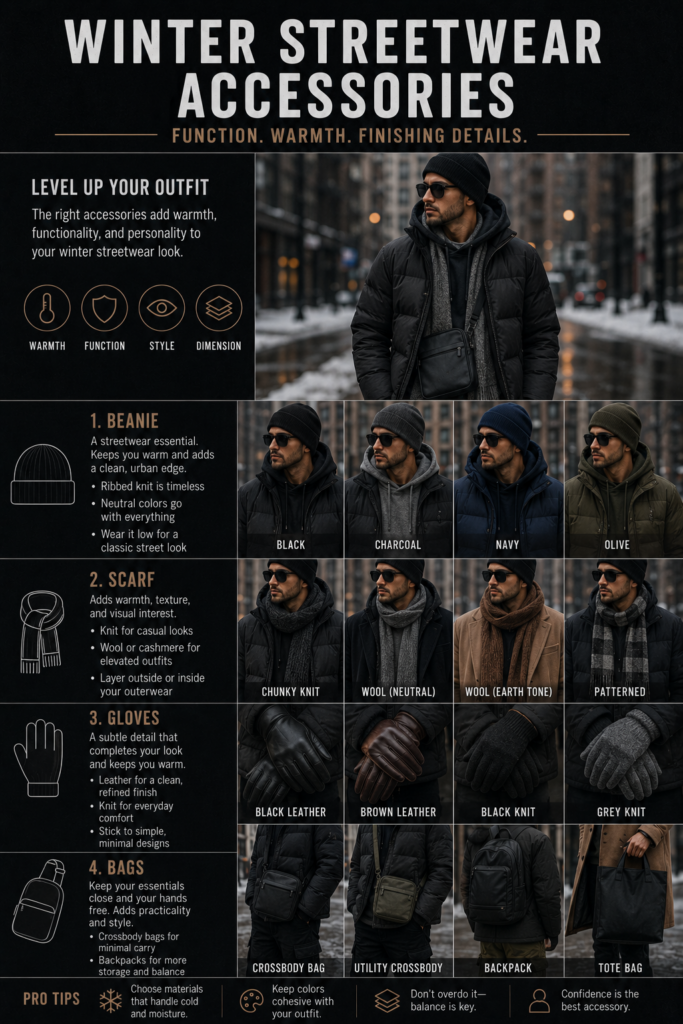
Accessories become both more practical and more visually prominent in winter because cold weather demands headwear, scarves, and gloves that simultaneously serve functional and aesthetic roles.
A beanie is the most essential winter streetwear accessory and one of the most deeply embedded in the culture from which streetwear emerged. A plain ribbed beanie in a neutral color adds warmth and a strong streetwear detail at the same time. Worn pulled down close to the brow, it creates a focused, urban quality that feels completely at home in a winter streetwear outfit.
A scarf adds both warmth and visual texture to a winter streetwear outfit. A chunky knit scarf in a neutral or earth tone layered over a hoodie and under a puffer jacket creates a cozy, dimensional layered look that feels genuine rather than styled. A wool or cashmere scarf in a more refined fabric works alongside overcoat combinations where the overall register of the outfit is more elevated.
Gloves in a simple leather or knit construction add a finishing detail to winter streetwear outfits that most men overlook. A clean pair of black leather gloves or simple knit gloves in a neutral color adds warmth and a subtle intentionality to the overall look without drawing excessive attention.
A crossbody bag or a quality backpack rounds out the winter streetwear outfit with practicality and visual dimension. In winter, a bag becomes even more essential because pockets are often occupied by gloves, phone, and other cold-weather necessities, and a dedicated bag solves this problem while adding to the overall aesthetic of the outfit.
For more outfit ideas that build on the streetwear foundations explored here, streetwear outfit ideas for men, streetwear outfit ideas for men in summer, and how to style a hoodie for men cover the full range of seasonal and casual combinations.
3 thoughts on “Streetwear Outfit Ideas for Men in Winter”