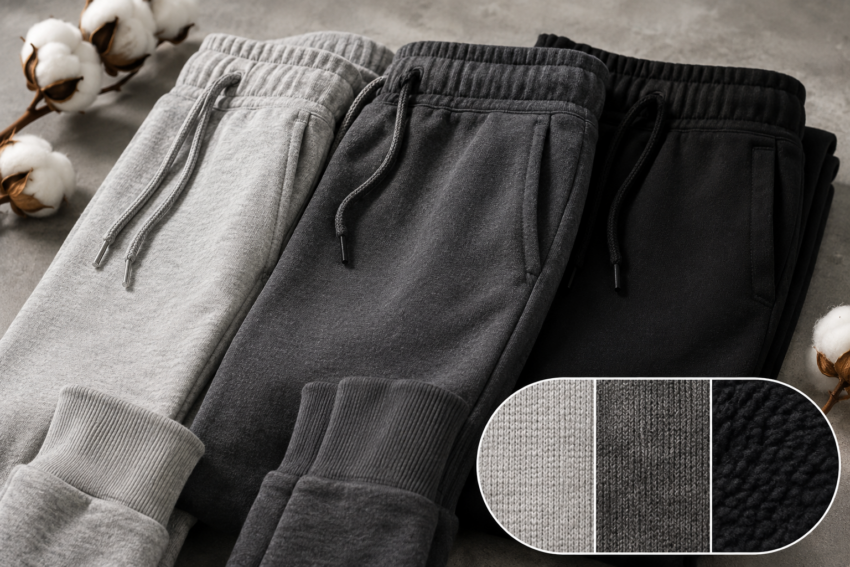
Most people shopping for joggers focus almost entirely on fit and color, which makes sense since those are the most immediately visible factors. But fabric weight is doing more work behind the scenes than most shoppers realize, affecting everything from how the jogger drapes on the body to how long it actually holds its shape after repeated wear. This guide breaks down cotton fabric weight specifically, why it matters more than people think, and how to actually evaluate it before buying.
What Fabric Weight Actually Means
Fabric weight is typically measured in grams per square meter, often abbreviated as GSM. This number tells you how dense and substantial the fabric is, independent of the specific weave or knit structure. A higher GSM means more fabric mass per unit of area, which generally translates to a thicker, heavier, more structured material. A lower GSM means a thinner, lighter fabric that drapes more loosely and tends to feel less substantial in hand.
For cotton joggers specifically, weight typically falls somewhere between 180 GSM on the lighter end and 400 GSM or higher on the heaviest end, with most quality streetwear-oriented joggers landing somewhere in the 280 to 350 GSM range. Understanding where a specific pair falls on this spectrum tells you a lot about how it will actually perform and look once worn.
Are Cotton Joggers a Woven Fabric?
Cotton joggers are knit fabric, not woven. Woven fabric, like the kind used in chinos or denim, is made by interlacing two sets of yarn at right angles, which creates a stiffer, more structured material with very little natural stretch. Knit fabric, used in joggers, hoodies, and t-shirts, is made by looping yarn through itself, which gives it the stretch and give that makes an elastic waistband and a tapered cuff possible in the first place.
Most cotton joggers use one of three knit types: French terry (smooth face, looped interior, good balance of structure and breathability), fleece (brushed interior for warmth and softness), or jersey (lightest and stretchiest, common in warm-weather joggers). This is separate from fabric weight, two joggers can both be knit fabric but behave very differently depending on which knit type and GSM they use.
Why Lightweight Cotton Often Disappoints
Joggers under roughly 220 GSM tend to have a noticeably different look and feel than heavier options, even when the cut and color are otherwise identical. Lightweight cotton drapes more loosely, which can create a slightly limp, less structured silhouette, particularly noticeable around the knee and at the cuff, where heavier fabric tends to hold a cleaner line.
Lightweight cotton also tends to show wrinkles and creasing more readily, and it’s more prone to developing a worn, slightly thin appearance after repeated washing. This doesn’t mean lightweight joggers are inherently bad, they have a real place for warm-weather wear when breathability matters more than structure, but they generally aren’t the right choice if the goal is a clean, deliberate streetwear silhouette.
The Sweet Spot: Mid to Heavyweight Cotton
Cotton in the 280 to 350 GSM range tends to be the most versatile and most commonly used weight for quality joggers, and there’s a clear reason this range has become something of an industry standard for the category. At this weight, the fabric has enough substance to hold its shape and create a clean, structured drape without becoming so heavy that it feels stiff or restrictive.
This weight range also tends to perform well across a broader temperature range than either extremely light or extremely heavy options, making it practical for three-season wear in most climates. It’s substantial enough to look intentional rather than flimsy, while still being comfortable enough for genuine all-day wear.
Heavyweight Cotton and Fleece
Above 350 GSM, cotton starts moving into genuinely heavyweight territory, often in the form of brushed fleece, which has a soft, slightly fuzzy interior surface designed specifically for warmth and comfort. This weight category is where most premium, winter-specific joggers live, offering the most structure, the most warmth, and generally the most substantial, expensive-feeling drape of any cotton weight category.
The tradeoff is breathability and seasonal flexibility. Heavyweight fleece joggers can feel genuinely too warm outside of cooler months, which means they tend to be a seasonal piece rather than a year-round staple, even though they often represent the highest quality tier within a cotton jogger lineup.
How to Evaluate Fabric Weight Without a Label
Not every product listing includes a GSM number, so learning to assess weight by feel and visual inspection is a useful skill. Holding the fabric up to light is one of the simplest tests, since lighter weight cotton will show more light passing through it, while heavier weight cotton will block more light and feel notably denser in hand.
Stretching the fabric slightly between your fingers also reveals information. Lighter fabric tends to feel thin and slightly see-through when stretched, while heavier fabric maintains more opacity and resistance. Checking how the fabric hangs when held up vertically is another useful test, heavier fabric falls in a more controlled, structured way, while lighter fabric tends to flutter or hang limply.
Cotton Blends vs Pure Cotton
Pure cotton offers the most breathability and the softest hand feel, but it’s also more prone to shrinking, pilling, and losing shape over repeated washes compared to blended fabrics. A cotton-polyester blend, commonly somewhere around 80 percent cotton and 20 percent polyester, tends to resist these issues better, holding its shape and color through more wash cycles while sacrificing a small amount of breathability and that pure-cotton softness.
For joggers specifically, which tend to get heavier rotation and more frequent washing than many other garments, a cotton-poly blend is often the more practical long-term choice, even though pure cotton can feel slightly nicer against the skin in the short term.
How Fabric Weight Affects Styling
Heavier fabric tends to photograph and style better specifically because it holds its shape more consistently. A heavyweight jogger maintains a cleaner silhouette whether you’re sitting, standing, or walking, while lighter fabric can shift and bunch in ways that disrupt the clean lines that make joggers work as a styled piece rather than just loungewear.
This matters especially for oversized or relaxed jogger silhouettes, where the fabric needs enough structure to maintain its intended drape rather than collapsing into a shapeless mass of fabric. Heavier weight cotton is part of why certain joggers look deliberately oversized and stylish while others in a similar cut just look baggy and unintentional.
Seasonal Fabric Weight Strategy
Building a jogger wardrobe with fabric weight in mind means thinking seasonally rather than buying every pair in the same weight. A lighter cotton blend, somewhere in the 220 to 260 GSM range, makes sense for spring and summer wear, prioritizing breathability over maximum structure. A mid-weight option in the 280 to 320 GSM range works well as a year-round workhorse for most moderate climates. A heavyweight fleece option, 350 GSM and above, earns its place specifically for the coldest months when warmth becomes the primary functional requirement.
Price and Fabric Weight Correlation
Generally speaking, heavier weight cotton costs more to produce, which is part of why premium joggers often command higher prices than basic, mass-market options. This isn’t a universal rule, some brands cut costs elsewhere while still using quality heavyweight fabric, but as a general signal, unusually low prices paired with vague or missing fabric weight information are often an indicator of lighter, less substantial material.
This doesn’t mean the most expensive option is automatically the best choice for every situation. A lightweight summer jogger doesn’t need to be heavyweight to be good at its job, but understanding this general relationship helps set realistic expectations when shopping, particularly online where you can’t physically feel the fabric before purchasing.
Reading Reviews and Product Descriptions Carefully
When shopping online, looking specifically for mentions of GSM, fabric weight, or descriptive language like “heavyweight,” “midweight,” or “lightweight” in product descriptions gives you more concrete information than relying purely on photos. Customer reviews that mention how the fabric feels, holds up after washing, or compares to other joggers the reviewer owns are often more reliable than marketing copy alone.
Why This Detail Is Worth the Attention
Fabric weight might seem like a minor technical detail compared to fit or color, but it’s genuinely one of the biggest factors separating joggers that look and feel premium from those that look cheap regardless of price point or brand name. Understanding GSM and learning to evaluate fabric weight by feel gives you a real edge when building out a jogger collection that actually performs the way you want it to, both in terms of comfort and in terms of how the finished outfit actually looks.