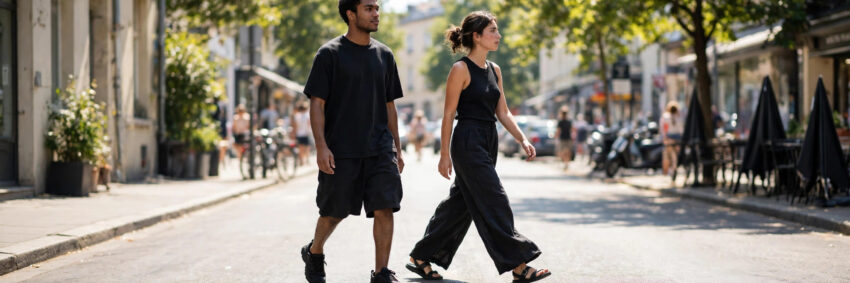
Black does not have to go into storage when the temperature climbs. The colour was never the real problem in summer; the problem is heavy fabric, tight fits and outfits built for a different season being worn into a heatwave out of habit. Wearing all black in hot weather is a solvable styling problem, and the solution is practical rather than mysterious. Choose fibres that move air and moisture, give the clothes room to let heat escape, keep skin covered where the sun is strongest without trapping warmth underneath, and build the outfit from fewer, lighter pieces than you would in spring. Do that, and the monochrome look that anchors so much of streetwear as a culture works just as well in July as it does in January. This guide stays on that one question, how to wear black in the heat, and works through fabric, weave, fit, sun safety and a set of summer formulas you can repeat all season without thinking too hard about them.
Start Here
New to dressing in black from head to toe? Begin with our complete guide to streetwear black outfits, then build your base with the streetwear essentials every rotation needs. For warm-weather outfit building in general, see our streetwear outfit ideas for men in summer, and browse the streetwear inspo gallery when you want to see the looks rather than read about them.
Key Takeaways
- Fabric decides comfort in black summer outfits; linen, open-weave cotton, rayon and mesh outperform denim, fleece and heavy twill every time.
- Loose, cropped and open fits let air move across the skin, and moving air is what allows sweat to cool you.
- Black absorbs more sunlight than pale colours, so shade, sunscreen and sensible timing matter as much as the outfit itself.
- Build summer formulas from two or three light pieces rather than layering; save hoodies and jackets for evenings.
- Mesh sneakers, sandals and breathable socks keep the lower half from undoing the work your top half is doing.
- Heat safety comes first: if you feel dizzy, nauseous or confused in the heat, stop, find shade and cool down.
Contents
- Start With Fabric, Not Colour
- Weave, Weight and Hand Feel
- Fit Is Your Air Conditioning
- Sun, Heat and Staying Safe
- The Lower Half and Footwear
- Three Summer Formulas in Black
- Evenings, Hoodies and the Shoulder Season
- Our View
- Frequently Asked Questions
- Sources
- Recommended
Start With Fabric, Not Colour
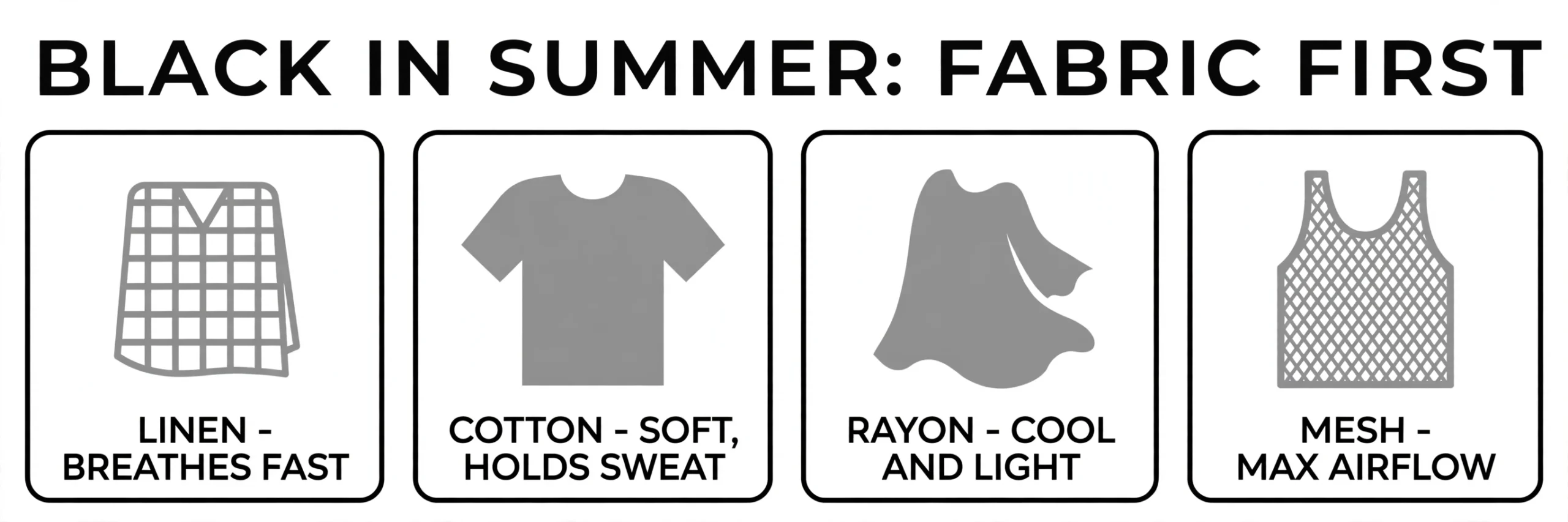
The single biggest change you can make to a black summer outfit is swapping the fabric, not the colour. A black linen shirt and a black polyester shirt may look identical in a photograph, but on a hot pavement at two in the afternoon they are completely different garments. One lets air pass through its fibres and pulls moisture away from the skin so it can dry. The other wraps you in a thin plastic sheet, holds sweat against your back and turns a short walk into an endurance event. When people say black is unbearable in summer, they are usually describing the second kind of garment, because most default black basics, the cheap tees, the heavy hoodies, the lined jackets, were never designed with heat in mind. Start instead from the fibre. Natural and regenerated fibres with an open structure, linen above all, have carried hot-climate dressing for thousands of years for a reason. As Britannica notes on linen, the fibre comes from the flax plant and has been prized since antiquity for cloth that is cool to wear, and the longer linen fibre history shows the same material serving Egyptian summers long before air conditioning existed. That pedigree matters because it tells you the fabric was selected by people who had no alternative cooling at all.
Cotton is the obvious second choice, with one honest caveat. A lightweight cotton tee in a loose weave breathes well, feels familiar and washes without drama, which is why it anchors most summer rotations. The caveat is sweat. Cotton absorbs moisture readily and holds onto it, so a soaked cotton shirt stays wet, heavy and clingy long after a linen or rayon shirt has dried. On a moderately warm day that hardly matters. On a genuinely hot one, or on a day when you will be walking a long way, it is the difference between a shirt that feels damp for ten minutes and one that feels damp until you get home. Rayon and its close relatives sit in a useful middle ground. Made from plant cellulose, rayon drapes softly, feels cool against the skin and dries faster than cotton, which is why so many summer shirts and wide trousers use it. It can crease and it prefers gentler washing, but for heat management it earns its place. Mesh, whether as a full jersey-style top or as panels in a tee or shorts, is the most direct solution of all, because it does not rely on the fibre at all. The holes do the work. Air moves straight through, and on a breezy street the cooling effect is immediate.
Seersucker deserves a mention even though black versions take some hunting. Its puckered surface holds most of the cloth away from the skin, so less fabric touches you and air circulates in the gaps, a trick hot-climate tailoring has used for generations. What should leave the rotation is easier to list. Heavy denim, fleece, brushed twill, lined blazers and anything with a waterproof coating all trap heat by design. Save them. A black summer wardrobe is not a smaller version of your winter wardrobe; it is a different wardrobe that happens to share a colour. If you already own a good black streetwear jacket, it can still earn evening wear later in this guide, but the daytime foundation is shirts, tees, vests and trousers in the fabrics below. Judge every black garment you own by holding it up to the light. If light passes through the weave, air will too, and that garment is a summer candidate. If it hangs like a curtain, it belongs to another season.
| Fabric | Breathability | Sweat behaviour | Best use in black |
|---|---|---|---|
| Linen | Excellent; open, stiff fibres let air through | Absorbs moisture and dries quickly; feels cooler as it dries | Shirts, camp-collar shirts, wide trousers, shorts |
| Cotton (lightweight) | Good in loose weaves; poor in heavy jersey | Absorbs sweat but holds it; stays damp and heavy | Relaxed tees, poplin shirts, light shorts |
| Rayon | Good; soft, fluid drape with airflow | Absorbs moisture, dries faster than cotton, feels cool on skin | Flowing shirts, wide-leg trousers, dresses |
| Mesh | Excellent; ventilation is built into the structure | Sweat passes through and evaporates fast | Jersey tops, layered tees, shorts, sneaker uppers |
| Seersucker | Very good; puckered weave lifts cloth off the skin | Moderate absorption, quick to feel dry because contact is minimal | Shirts, shorts, unstructured summer tailoring |
Weave, Weight and Hand Feel
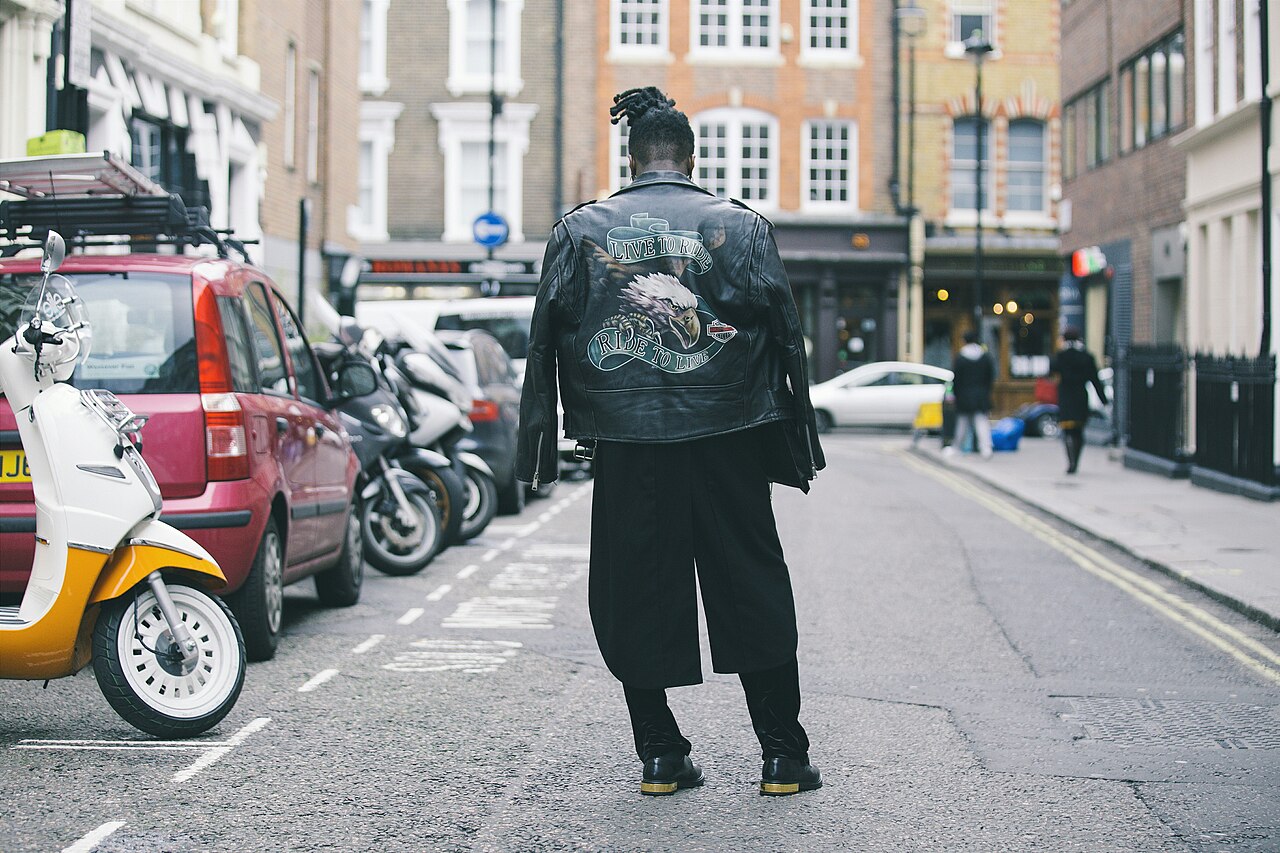
Two shirts in the same fibre can perform completely differently, because weave and weight matter almost as much as the fibre itself. A tight, dense weave blocks wind, which is exactly what you want from a winter overshirt and exactly what you do not want in August. An open weave, the kind you can see through slightly when you hold it to a window, lets air pass with every step you take, and that passive ventilation does more for comfort than any technical finish printed on a label. This is why a black poplin or voile shirt can feel cooler than a black tee even though the shirt covers your arms. The tee’s jersey knit, for all its softness, is a relatively closed structure, and in heavyweight form it becomes a blanket. Summer tees should be light, ideally the kind that feel almost insubstantial in the hand, with a relaxed body that does not sit flush against the torso. When you shop, learn to read weight by touch. Pinch the fabric. If it feels like a bedsheet, it will wear like one, which in summer is a compliment. If it feels like a sweatshirt’s thinner cousin, leave it on the rail.
Texture plays a supporting role here, and it is worth separating from the texture games of colder seasons. In winter, black outfits stay interesting through contrast between matte and shine, wool and leather. In summer the priority inverts. The textures that matter are the ones that reduce skin contact and encourage airflow: slubby linen with its uneven yarns, crinkled cotton, seersucker’s pucker, the slight roughness of an open-knit polo. Each holds the garment fractionally away from your body, and those fractions add up across a whole torso. Smooth, slick fabrics do the opposite. A satin-finish shirt or a coated trouser sits directly on the skin, seals in a layer of warm air and shows every patch of sweat the moment it forms. There is also a visual dividend to choosing airy textures in summer. Black can look flat and heavy in hard sunlight, a single dark block with no detail. A slub, a crinkle or a mesh panel breaks that block up, gives the eye something to read and keeps the outfit looking deliberate rather than default. The all-black streetwear for men guide and the companion all-black streetwear for women guide both build on this point: in one colour, surface is what separates a considered outfit from a uniform, and in summer the surfaces that look best are usually the ones that breathe best too.
Linings deserve a final word, because they quietly sabotage more summer outfits than any fibre choice. A lined black blazer, a lined pair of shorts, even a fully lined dress adds a second layer precisely where you least want one, and synthetic linings are often the least breathable part of the garment. When you buy black summer pieces, turn them inside out in the shop. Unlined or half-lined construction, taped seams and mesh pocket bags are the details that separate warm-weather clothing from clothing that merely comes in a summer colour. The same applies to hats and bags, which return later in this guide. A black crossbody bag worn against your back creates a warm, damp patch the size of the bag; a smaller bag, worn looser, or carried in the hand on the hottest days, avoids it. Heat management is mostly this, a series of small, unglamorous decisions about contact, weight and air, made consistently. No single one of them transforms a heatwave. Together they are the difference between enduring an outfit and forgetting you are wearing it.
Fit Is Your Air Conditioning
If fabric is the first lever, fit is the second, and it costs nothing to pull. Your body cools itself by moving heat away from the skin, and clothing either helps that process or obstructs it. The science underneath is straightforward. As the overview of how thermoregulation works explains, the body holds its core temperature within a narrow range and leans heavily on sweating when the air gets warm, and sweating only cools you when the sweat can leave the skin. That is where evaporation cools the body becomes a styling principle rather than a physics lesson: moisture evaporating from skin or cloth carries heat with it, but evaporation needs moving air. A skin-tight black tee seals a layer of still, humid air against your chest and slows the whole system down. A relaxed tee, cut with room through the body and arm, bellows slightly as you walk. Each stride pumps a little fresh air across the skin, and the cooling you feel on a breezy corner in a loose shirt is that pump working at full capacity. Fit, in other words, is not only an aesthetic choice in summer. It is equipment.
Practically, this means sizing for air. Tops should skim rather than cling, with sleeves that end around the elbow or above it and hems that finish at or above the hip so air can enter from below. Cropped and boxy cuts, long staples of streetwear, happen to be ideal summer engineering, because the shortened hem turns the whole garment into a chimney: warm air rises and exits at the neck while cooler air draws in underneath. Wide trousers do the same work on the lower body, and they pair naturally with the relaxed direction of current streetwear jeans and cargos, provided you choose summer weights rather than rigid denim. Shorts remain the simplest answer of all, and black shorts in linen, cotton twill or mesh lose none of the monochrome effect while exposing the legs, a large surface area, to the air. For dresses and skirts, the same logic favours volume: a loose black slip dress or a tiered skirt moves as you move and never seals against the body. What to avoid is the middle trap of clothes that are neither structured nor loose, the slim tee that touches everywhere and breathes nowhere. In winter that fit reads clean. In summer it reads, and feels, like a wetsuit.
Openings are the other half of airflow, and they are free. An unbuttoned camp-collar shirt over a black vest gives you a personal ventilation system you can adjust button by button through the day. Sleeves pushed to the elbow, a zip left half down on a light track top, a shirt worn open over a tee in the morning and removed entirely by noon, these small adjustments regulate temperature more precisely than any single garment can. Necklines matter too. A wide scoop, a V or an open collar exposes the chest and neck, where you feel heat most, while a tight crew neck in heavy ribbing does the opposite. Even underwear and base layers count. A breathable, moisture-moving base under a loose black overshirt will outperform a premium tee worn alone and tight, because the system, not the single piece, is what touches your skin all day. Build outfits the way you would ventilate a room: an opening low, an opening high, and nothing sealed in between. Your wardrobe already contains most of what you need. It is the combinations, tight on tight, layer on layer, that turn black from a colour into a climate.
Sun, Heat and Staying Safe
Honesty about the sun is part of wearing black well, because the colour does absorb more energy from sunlight than pale shades do. The basic physics, covered in the background on black and light absorption, is that dark surfaces take in more of the light that hits them rather than reflecting it away, and some of that energy becomes heat at the surface of the cloth. That is real, and on a still, cloudless day a black shirt in direct sun will feel warmer to the touch than a white one. But it is only half the story, and it is the half people overweight. The heat that reaches your skin depends on the whole system: how much sun hits the fabric, how much air moves through it, how much of it touches you and how long you stay out in it. A loose black linen shirt in a light breeze can easily feel cooler than a tight white synthetic tee in still air, because the breeze strips the absorbed heat from the loose shirt before it ever reaches you, while the tight tee traps your own body heat regardless of its colour. Desert dress in several hot cultures has long included dark, loose robes for related reasons: coverage plus airflow beats exposure. The lesson is not that colour does not matter. It is that colour is one variable, and fit and fabric are bigger ones.
Coverage, used well, is also sun protection. Understanding how ultraviolet radiation works clarifies why: the rays that burn skin and damage it over time are blocked or absorbed by cloth, and a covered shoulder does not burn. A black tee therefore protects the skin it covers far better than bare skin does, and denser, darker fabrics generally let less ultraviolet through than thin, pale ones. The exposed areas are the ones to manage. Follow the standard advice on how sunscreen protects skin: apply it to the face, neck, arms and any other bare skin before you go out, reapply after heavy sweating or swimming, and treat it as a routine like keys and phone rather than a beach-only ritual. A black cap or bucket hat from the streetwear hats rotation shades the face and scalp, and in black it completes the outfit instead of interrupting it. Sunglasses finish the job for your eyes. None of this requires leaving the monochrome palette, which is the point: summer black is not a compromise between style and sense, it is style with the sense built in.
The safety floor sits underneath all of it, and it is not optional content. Heat illness is a genuine medical risk, not a discomfort to push through, and the National Weather Service heat safety guidance is clear about the basics: drink water regularly rather than waiting for thirst, take breaks in shade or air conditioning during the hottest part of the day, and learn the signs that distinguish ordinary overheating from an emergency. Its companion advice on staying safe during heat adds the practical steps for extreme days, including checking on others and never leaving anyone in a parked car. Translate that into dressing terms and the rules are simple. On the most extreme days, shorten your time in direct sun, choose the shady side of the street, carry water, and let the outfit flex: hat on, shirt open, sleeves up, and no heavy layer carried out of habit. If you feel dizzy, sick, confused or stop sweating in serious heat, that is your cue to stop, get into shade or indoors, cool down and seek help if symptoms do not ease. No outfit, in any colour, is worth a trip to hospital, and the smartest dressers in hot cities share one habit that has nothing to do with clothes. They plan their day around the heat rather than pretending it is not happening, running errands early or late and treating midday sun as a condition to route around.
The Lower Half and Footwear
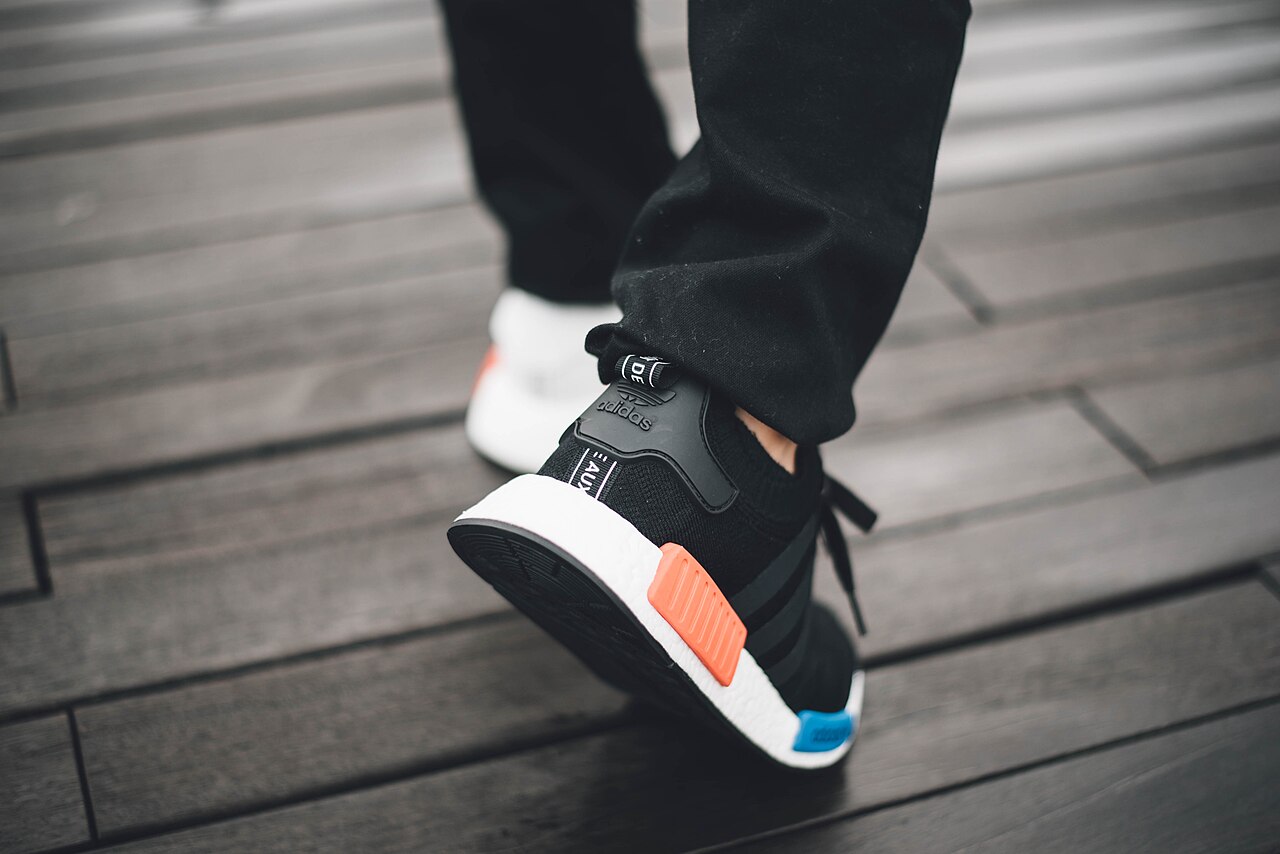
Heat rises, but discomfort often starts at ground level, where hot pavement and closed shoes quietly cook your feet all day. Feet sweat a great deal, they sit closest to sun-baked concrete, and in an all-black outfit they are usually sealed inside black leather sneakers or boots chosen to match the rest of the look. That is the summer outfit’s weakest point. The fix mirrors everything above: choose structure that admits air. Knit and mesh sneakers are the obvious upgrade, because their uppers are closer to a net than a shoe, and a black knit runner with a pale sole keeps the monochrome read while letting heat escape with every step. Canvas low-tops breathe reasonably well too. Leather, suede and synthetic leather uppers are the winter choices; they hold heat, show salt lines from sweat and take longest to dry overnight. Sandals and slides sit at the far end of the scale and, styled with wide black trousers or shorts and clean socks or none, they read as a deliberate summer decision rather than giving up. The streetwear calendar has long since accepted sandals with tailored black pieces, and hot weather is the strongest argument for joining it.
Socks are the hidden layer nobody plans. A thick cushioned sock inside a mesh shoe cancels much of the shoe’s ventilation, while a thin, moisture-moving sock, or a no-show style in sandals weather, keeps the system open. Rotate shoes across the week rather than wearing one pair daily; a day of rest lets the insole dry fully, which keeps both the shoe and your feet fresher in a heatwave. Trousers and shorts deserve the same ground-level thinking. A wide black trouser that ends above the shoe lets air travel up the leg, and a cropped hem is not just a styling detail in summer, it is an exhaust vent. Long trousers that pool over a closed shoe seal that vent shut. Shorts solve it entirely, and the strongest black summer looks often pair an oversized tee or open shirt with tailored black shorts, because the proportions, volume above, skin below, look intentional and feel like wearing half as much clothing. Skirts and dresses follow the same principle: length is fine, provided the fabric is light and the cut lets the cloth move rather than wrap. Judge the lower half by a simple test at the end of a hot day. If your feet and legs feel like the coolest part of you, the outfit worked. If they feel like the warmest, no shirt choice above them was ever going to rescue the day.
Three Summer Formulas in Black
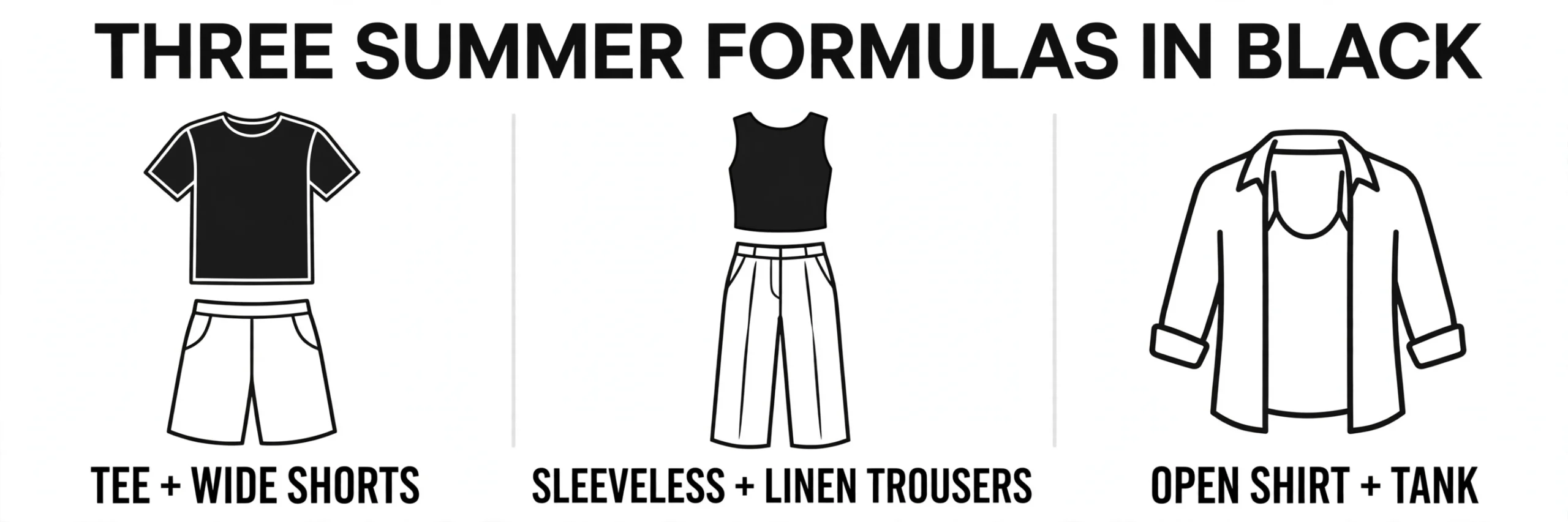
Formulas turn all of this into mornings that take two minutes, and three reliable combinations will carry an entire summer of black dressing. The first is the linen set: a black camp-collar linen shirt, worn open or buttoned halfway, over a black vest or on its own, with wide black linen or rayon trousers and knit sneakers or sandals. It is the coolest formula here and the most forgiving, because linen’s creases are part of its character and the whole outfit moves air at the chest, the legs and the feet at once. It works for men and women with almost no adjustment, dresses up a notch with a cleaner shoe and down with a cap, and it is the outfit to reach for on the hottest forecast of the week. The second formula is the oversized tee and shorts: a boxy black tee in lightweight cotton, black tailored or mesh shorts, a black bucket hat and breathable sneakers. This is the everyday city uniform, the one for errands, travel days and long walks, and its comfort comes from the chimney effect of the boxy tee paired with bare legs. Keep the tee long enough to feel deliberate and the shorts structured enough to balance it, and the proportions do the styling work for you.
The third formula is the monochrome dress or co-ord: a loose black slip dress, a sleeveless black jumpsuit, or a matching black vest and wide shorts set, finished with sandals and sunglasses. Sleeveless cuts expose the shoulders and arms, which is where this formula wins its cooling, and a single-piece outfit removes every decision about what matches, because in black everything already does. Add a black mesh or open-knit layer over a dress for evenings and the same base gains texture without meaningful warmth. Across all three formulas the same checks apply. Nothing tight, nothing lined, nothing heavy, and one element, a hat, an open shirt, a cropped hem, always left open to the air. If you want more warm-weather combinations beyond the black palette, our roundup of summer streetwear outfit ideas for men covers the wider field, and the general streetwear black outfits guide covers the year-round foundations this page deliberately leaves aside. Build your summer around two of the three formulas, alternate them, and black stops being a statement you sweat for and becomes simply what you wear.

Evenings, Hoodies and the Shoulder Season
Summer black comes back into its own after sunset, when the day’s rules relax and the heavier pieces you love can return in rotation. Temperatures fall, the sun variable disappears, and the only question left is the cool of the evening itself. This is when a lightweight black jacket earns its keep: an unlined overshirt, a thin track jacket or a mesh-lined windbreaker thrown over the day’s tee or vest handles air-conditioned trains, rooftop breezes and the walk home without reopening the heat problem. The black hoodie belongs here too. As GQ on wearing hoodies sets out, the hoodie works as a styling piece in its own right, layered and proportioned deliberately rather than thrown on, and on a summer evening, worn open over a vest or tee with shorts or wide trousers, a light hoodie in a summer weight gives you the silhouette streetwear runs on without the daytime penalty. The black streetwear hoodie guide goes deeper on fits and pairings; the summer-specific rule is simply timing and weight. If the hoodie is fleece-lined or heavyweight, it is a shoulder-season piece, for the first cool weeks of autumn and the last of spring, when it can carry an outfit through a full day. In high summer it is an evening layer you carry tied or in a bag, not a base you commit to at noon.
That timing principle generalises into the best closing advice this guide can give. Summer dressing in black is not a different wardrobe so much as a different schedule for the wardrobe you already own. Light fibres and open fits own the day. Coverage and hats manage the sun at its peak. The jackets, hoodies and leather that define the black streetwear look wait for the hours when they cost you nothing, and they look better for the wait, because an outfit chosen for its moment always reads sharper than one worn in defiance of the weather. Plan the day in two outfits if you need to, a breathable base that never changes and a layer that joins it later, and the colour never has to be negotiated at all. Black in summer is not a compromise or a stunt. Done with fabric, fit and timing in mind, it is simply good dressing that happens to be black, and it will still be working for you when the heat finally breaks.
Our View
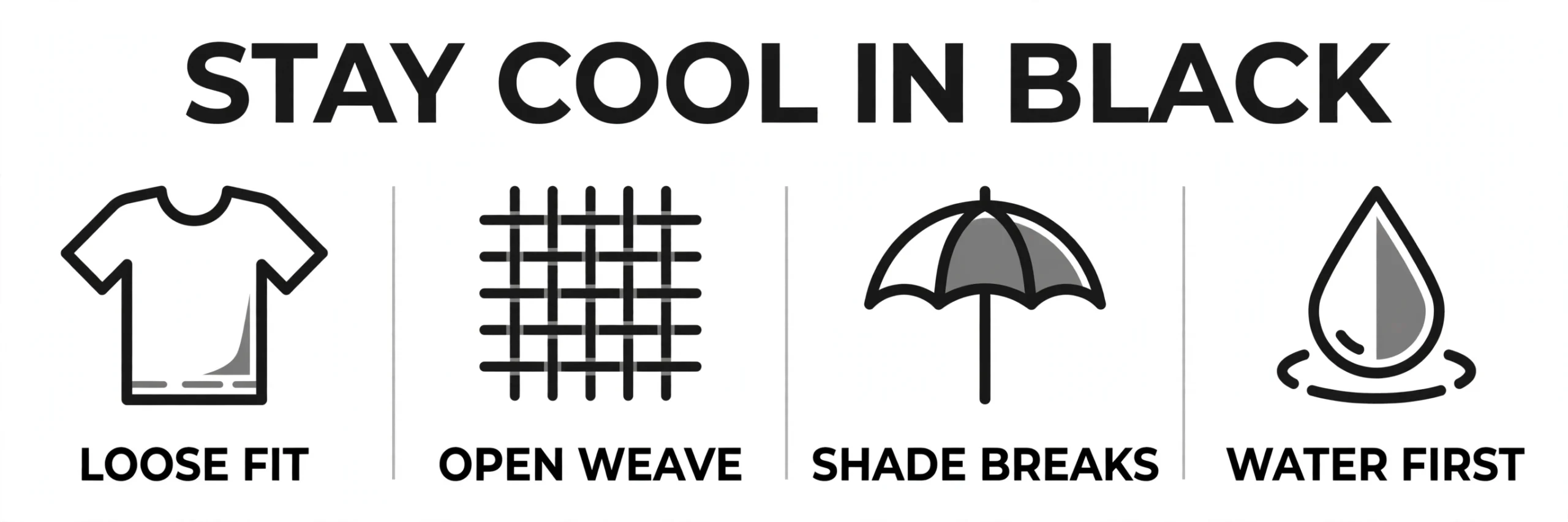
Our view is that the debate about black in summer was settled by hot climates a long time ago, and the answer was never to abandon the colour. It was to respect the conditions: loose cuts, honest fibres, covered skin where the sun is fierce and bare skin where the air can reach it. Black asks a little more thought in July than it does in October, but the reward is the same year-round identity, worn without suffering for it. Dress for the weather first and the colour second, and the colour will take care of itself.
Wear black in the heat if black is what you wear. Just build the outfit for the heat, in linen, in space, in shade, and let the colour be the easiest part of the decision.
— Brian Ka
Frequently Asked Questions
Does black clothing really make you hotter in summer?
It can feel warmer in direct sun because dark fabric absorbs more sunlight, but fit and fabric matter more in practice. A loose black linen shirt in moving air often feels cooler than a tight pale synthetic top, because airflow and evaporation do most of the cooling work.
What is the best fabric for black clothes in hot weather?
Linen is the strongest all-round choice: it breathes, absorbs moisture and dries quickly. Lightweight cotton, rayon, mesh and seersucker are all good options too. Avoid heavy denim, fleece, lined garments and coated fabrics on hot days.
Can I wear a black hoodie in summer?
Yes, in the evening or in shoulder season, and in a lightweight, unlined fabric. Wear it open over a vest or tee rather than as a sealed daytime layer, and save heavyweight fleece hoodies for cooler months.
How do I stop a black outfit looking flat in bright sunlight?
Use texture and surface contrast: slubby linen, crinkled cotton, mesh panels and matte knit sneakers break up the single dark block. Fit contrast helps too, pairing a boxy top with wide trousers or tailored shorts.
Does black clothing protect you from the sun?
Covered skin is protected skin, and denser, darker fabrics generally let less ultraviolet light through than thin, pale ones. You still need sunscreen on exposed areas such as the face, neck and arms, plus a hat and shade during the strongest sun.
Questions About Building Your Wardrobe?
Working on a black summer rotation and not sure which pieces to buy first, or which of your current clothes can be adapted? Send us your questions and we will point you in the right direction.
Sources
- National Weather Service — Heat Safety
- National Weather Service — During a Heat Wave
- Encyclopaedia Britannica — Linen
- Wikipedia — Linen
- Wikipedia — Ultraviolet
- Wikipedia — Sunscreen
- Wikipedia — Thermoregulation
- Wikipedia — Evaporation
- Wikipedia — Black
- GQ — How to Wear a Hoodie
- Wikipedia — Streetwear