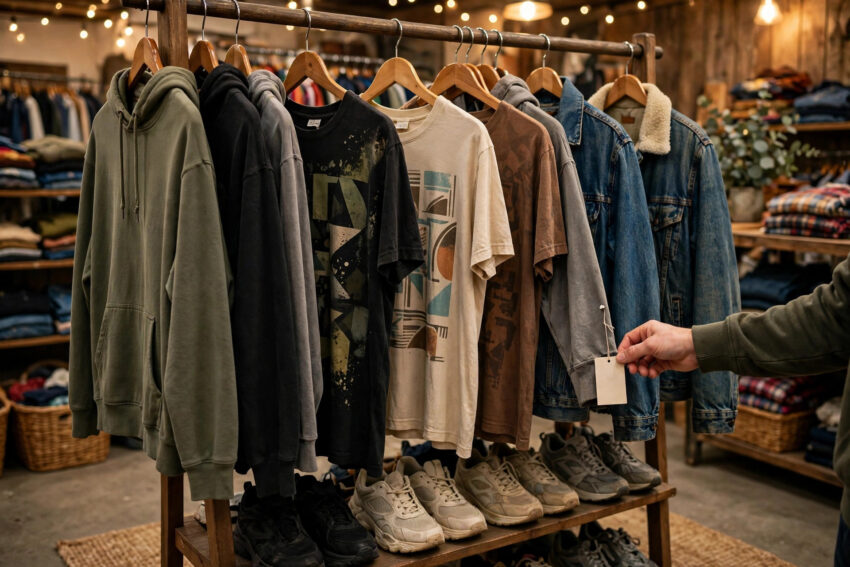
Secondhand is where streetwear gets interesting and where it gets risky, in the same rail. The hoodie that sold out years ago, the graphic tee from a run nobody reprints, the denim jacket already broken in by somebody else: all of it circulates through thrift shops, vintage stores and resale listings at prices new retail cannot touch. So do the fakes. Counterfeit versions of popular pieces move through the same channels, mixed into donated stock, estate lots and online listings, and the buyer who cannot tell a real label from a copied one pays genuine money for a garment that was never genuine. This guide is about secondhand sourcing and authentication only: what thrifted, vintage and secondhand actually mean, where to buy each kind of stock, the label, stitching, hardware and print checks that expose a fake, how to buy online when you cannot hold the garment, how to judge condition and old sizing, and how to price a used piece fairly. Learn the checks once and every rail, market stall and listing becomes readable.
Start Here
Build the wardrobe the secondhand pieces have to join from streetwear essentials, and see complete looks assembled in our streetwear outfit ideas for men. The piece you will thrift most often is covered in full in our guide to streetwear hoodies.
Key Takeaways
- Thrifted, vintage and secondhand are different claims: secondhand means previously owned, thrifted names the charity and donation channel, and vintage should mean genuinely old, not just old looking.
- Every channel trades price against checking: thrift shops are cheapest and uncurated, vintage shops curate and charge for it, and resale platforms shift the checking onto photographs.
- Authenticate in a fixed order: labels first, then stitching, then hardware, then print and logos, because a fake usually fails an early, quiet check before it fails the loud one.
- The labels on a real garment agree with each other: brand label, care label and country of origin tell one consistent story about fibre, maker and era.
- Online, buy the evidence, not the listing: clear tag photographs, measurements in centimetres and a returns route matter more than a confident description.
- Price from sold prices for the same piece in the same condition, and subtract the cost of cleaning, repairs and missing parts before you call anything a bargain.
Contents
- Where to Buy: The Channels Compared
- Thrifted, Vintage and Secondhand: What the Words Mean
- Authentication: Labels, Stitching, Hardware and Print
- Buying Online Without Holding the Garment
- Condition, Fit and Sizing on Old Garments
- Price: What a Fair Secondhand Price Looks Like
- Mistakes That Cost Secondhand Buyers Money
- Our View
- Frequently Asked Questions
- Sources
- Recommended
Where to Buy: The Channels Compared
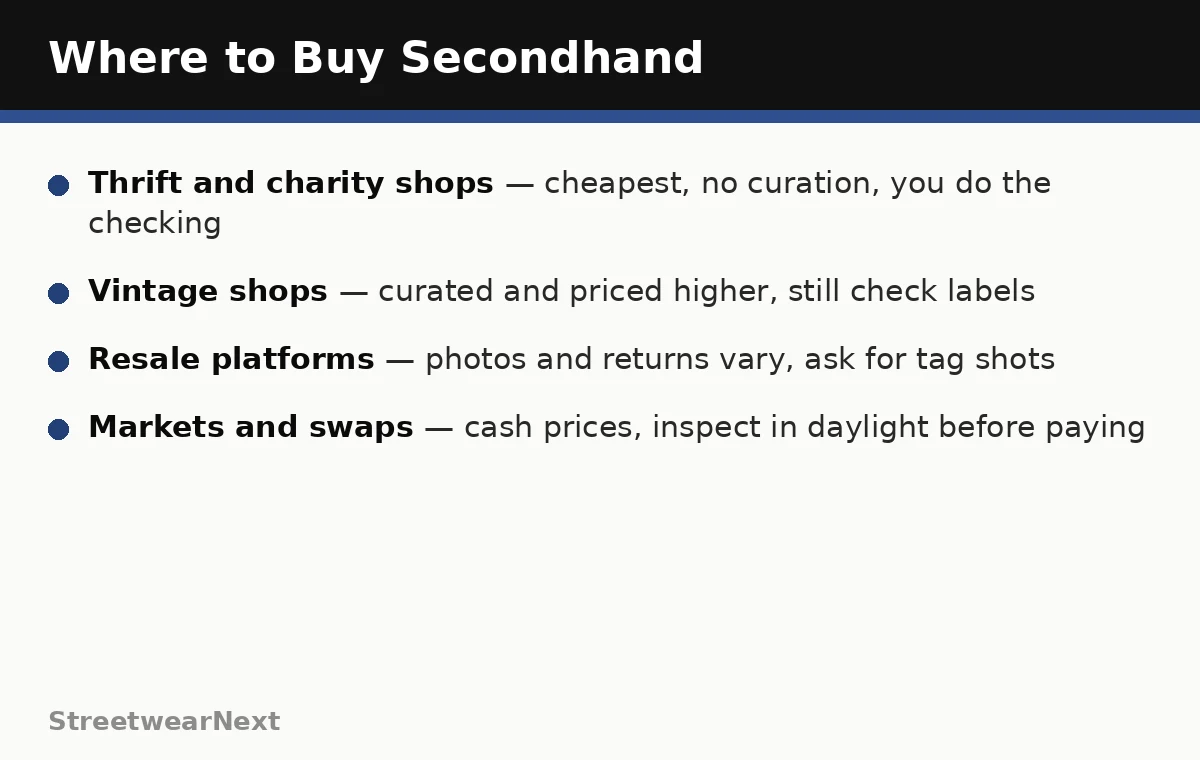
Every secondhand channel sells the same clothes at a different split of price, effort and risk, and choosing the channel is the first buying decision you make. Start with the thrift shop, the channel built on donated stock. The model behind thrift stores and donated stock is volume: donations arrive unsorted by fashion value, staff price by category and condition rather than by hype, and the result is the cheapest rail in secondhand clothing and the least curated. A desirable hoodie can sit between ordinary fleeces at a flat category price because nobody in the pricing chain was paid to recognise it. That is the opportunity and the workload. Nothing in a thrift shop has been authenticated for you, sizes are mixed, stock turns over without restocks, and the good pieces leave with whoever checks the rail most often. Go frequently, go with the authentication checks in your head, and treat every find as unverified until your own hands have verified it.
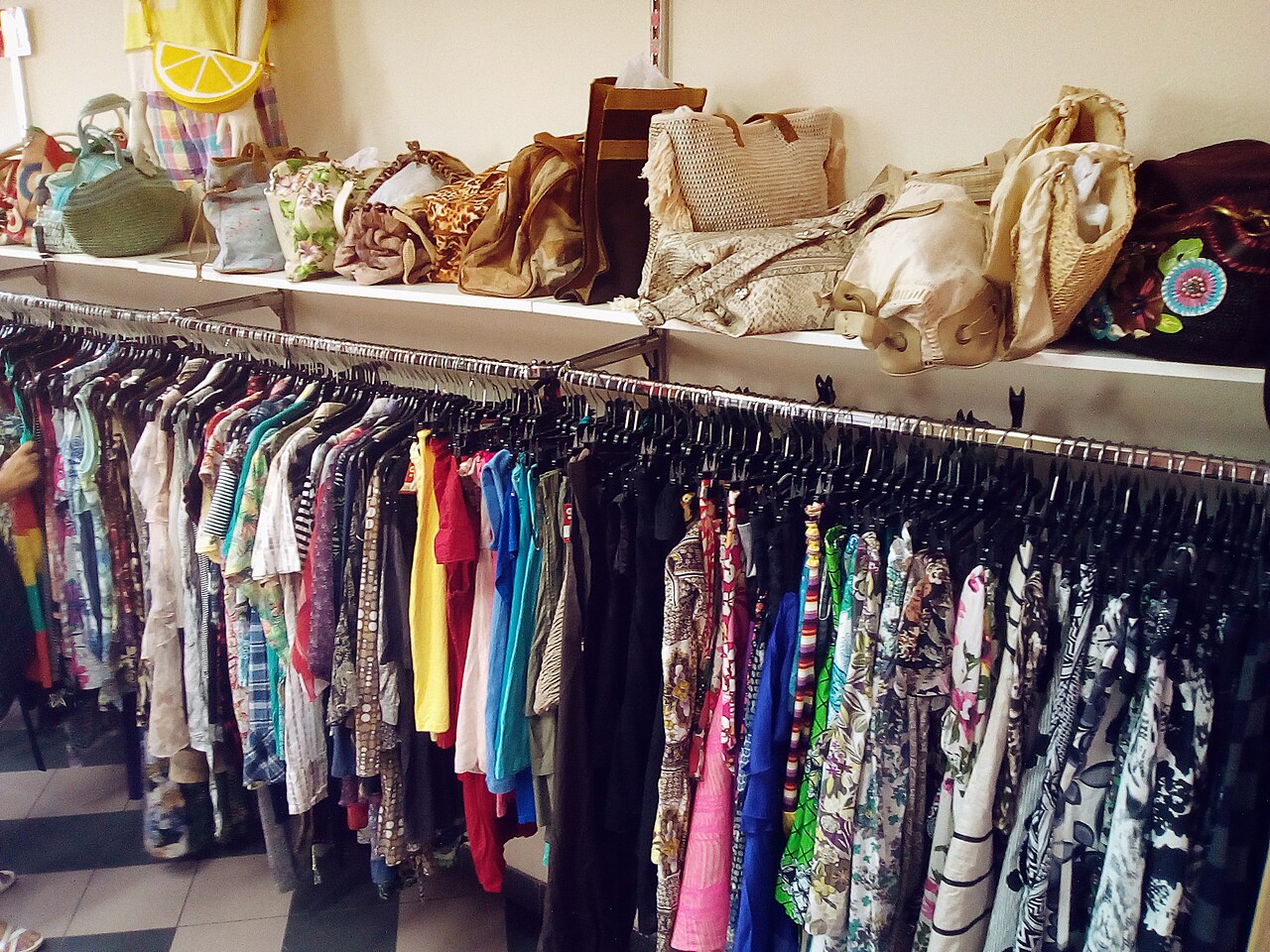
The vintage shop and the general secondhand shop sit one step up. The broader trade described in the background on second-hand shops and resale buys its stock rather than receiving it, and a shop that pays for clothes chooses them. Vintage shops curate hardest: the owner has already walked the estate sales, house clearances and wholesale rag houses, pulled the pieces with genuine age or a recognised label, and priced the knowledge into the tag. You pay more than thrift prices for the same garment, and what the extra money buys is selection, not certainty. A curated shop can still be fooled, can still grade condition generously, and can still price a famous label above what the piece will ever be worth to wear. The checking habit does not retire at a nicer door. It just gets faster, because the stock has been pre-sorted into the categories worth checking closely.
Resale platforms and markets complete the set, and they split in opposite directions. A platform listing gives you search, filters, sold price history and, on many services, a returns or dispute route, but the garment is photographs and a description until it arrives. A market stall, clothing swap or car boot sale gives you the garment in your hands and daylight to inspect it in, but the transaction is final the moment cash moves. Neither is safer in itself. The platform is safer for a beginner buying a labelled piece, because the evidence can be studied slowly and shared with knowledgeable friends before money moves. The market is safer for an experienced buyer, because the full authentication routine takes ninety seconds in person and no photograph can be angled to hide what your hands will find. Match the channel to your current skill, not to the piece you hope to find.
| Channel | Price level | Curation | Your checking load |
|---|---|---|---|
| Thrift and charity shops | Lowest, priced by category | None, donated stock | Highest, nothing is pre-checked |
| Vintage shops | Highest of the used channels | Strong, bought and selected stock | Medium, selection done, authentication still yours |
| Resale platforms | Widest range, set by sellers | By search and seller, not by the platform | High, checks run on photographs |
| Markets and swaps | Low, cash and negotiable | None to light | High, but the garment is in your hands |
Use the table as a budget for effort as much as money. A month of thrift visits costs little cash and a lot of hours, and it suits a buyer building a wardrobe slowly around whatever the rails produce. A vintage shop costs more per piece and almost no time, and it suits a buyer hunting one specific era or label. Platforms reward patience and punishing attention to photographs. Markets reward early mornings and fast, confident hands. Most good secondhand wardrobes are built across all four, with the staples from our streetwear jackets guide and similar anchor pieces hunted wherever they surface, rather than from one channel defended out of habit.
Thrifted, Vintage and Secondhand: What the Words Mean
Secondhand sellers use three words as if they were interchangeable, and the differences between them are where vague listings and inflated prices hide. Secondhand is the plain, honest umbrella term: the garment was owned before you. It says nothing about age, quality or channel, and a two year old hoodie sold by its first owner is secondhand in exactly the same way as a forty year old jacket. Thrifted is narrower. It describes where the piece came from, the donation funded charity and thrift channel, and it has drifted into a general style word for any cheap used find. When a seller calls a piece thrifted, the only hard information in the word is the channel. It is not a claim about age, and it is not a claim about authenticity, however warm it sounds.
Vintage is the word that carries a real claim, and it is the word most often stretched. As the overview of vintage clothing and its periods sets out, vintage properly refers to clothing from an earlier era, made in and characteristic of its period, with the trade commonly treating pieces around twenty years old or more as vintage and older or rarer pieces shading into antique. The claim is about when the garment was made, and it can be checked: label design, country of manufacture, fibre mixes, care symbols and construction methods all date a garment, and a piece sold as vintage should date correctly under those checks. Vintage style, vintage look and vintage inspired are the escape hatches. Each one quietly withdraws the age claim while keeping the word in the headline, and a new garment in an old style is a perfectly fine purchase at a new garment price in a used rail. It is a bad purchase at a genuine vintage price.
The words matter beyond honesty because they set the price ladder in your head before you have touched the garment. A seller who can call a five year old mass market hoodie vintage has already moved it up a price tier on vocabulary alone. Correct the vocabulary and the price often corrects itself in the negotiation. There is also a plainer reason to keep used clothing circulating, whatever words it travels under. The figures in the EPA textile waste data show textiles making up a large and growing stream of municipal waste, most of it landfilled, which means every wearable garment resold and reworn is one kept in use rather than buried. That is a good reason to buy secondhand. It is not a reason to skip the checks, because a fake bought in a good cause is still a fake, and it falls apart on the same schedule whether the money felt virtuous or not.
Authentication: Labels, Stitching, Hardware and Print
Authentication is a routine, not a talent, and it works because real garments are made consistently while fakes are made cheaply, so the copy almost always cuts a corner the original did not. Run the checks in the same order every time: labels, stitching, hardware, print. The order matters because the early checks are the hardest to fake well and the quickest to run. A legal frame sits underneath the routine. A trademark protects brand names and logos as the maker’s identifying marks, which is why the name, the logo and the label are the legally defined identity of the garment, and why copying them is the offence at the centre of the whole trade in counterfeit consumer goods. Enforcement bodies such as the National IPR Center coordinate the fight against that trade at national level, and the guidance collected at StopFakes anti-counterfeiting guidance makes the consumer side of the same point: suspiciously cheap branded goods, sold through informal channels, are the standard shape of the problem. Your rail side version of that guidance is the four checks below.
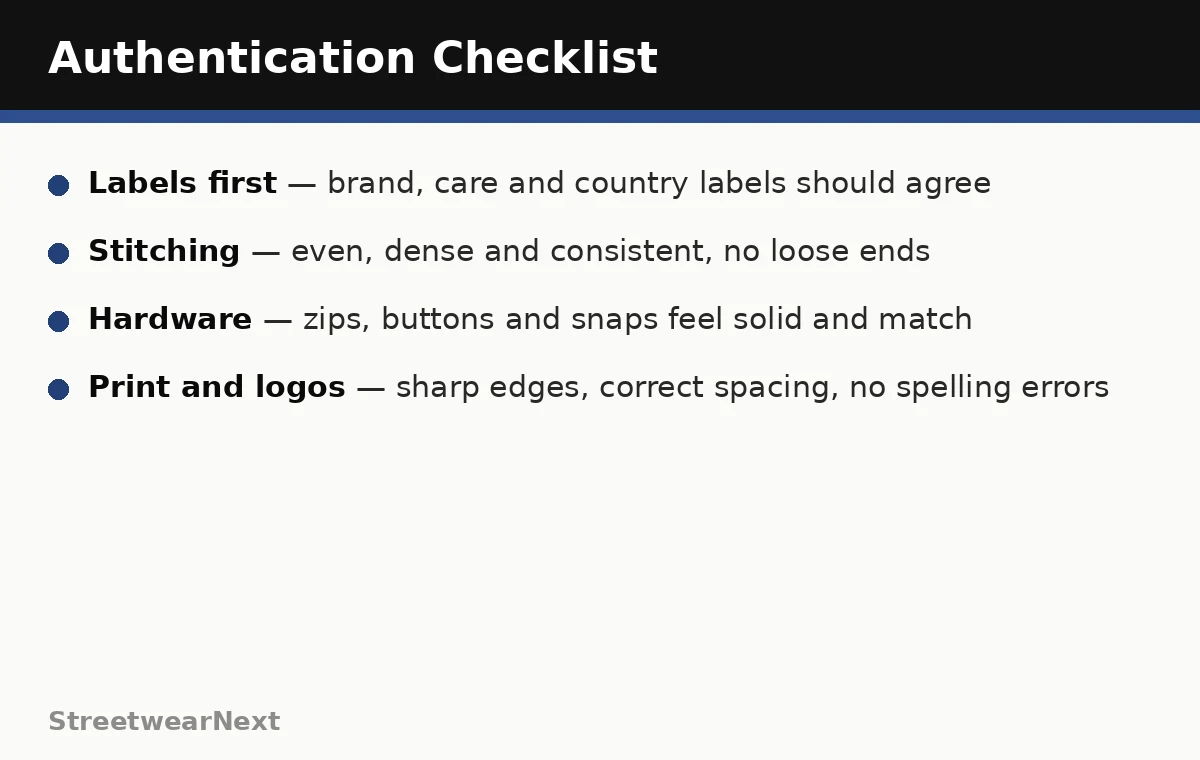
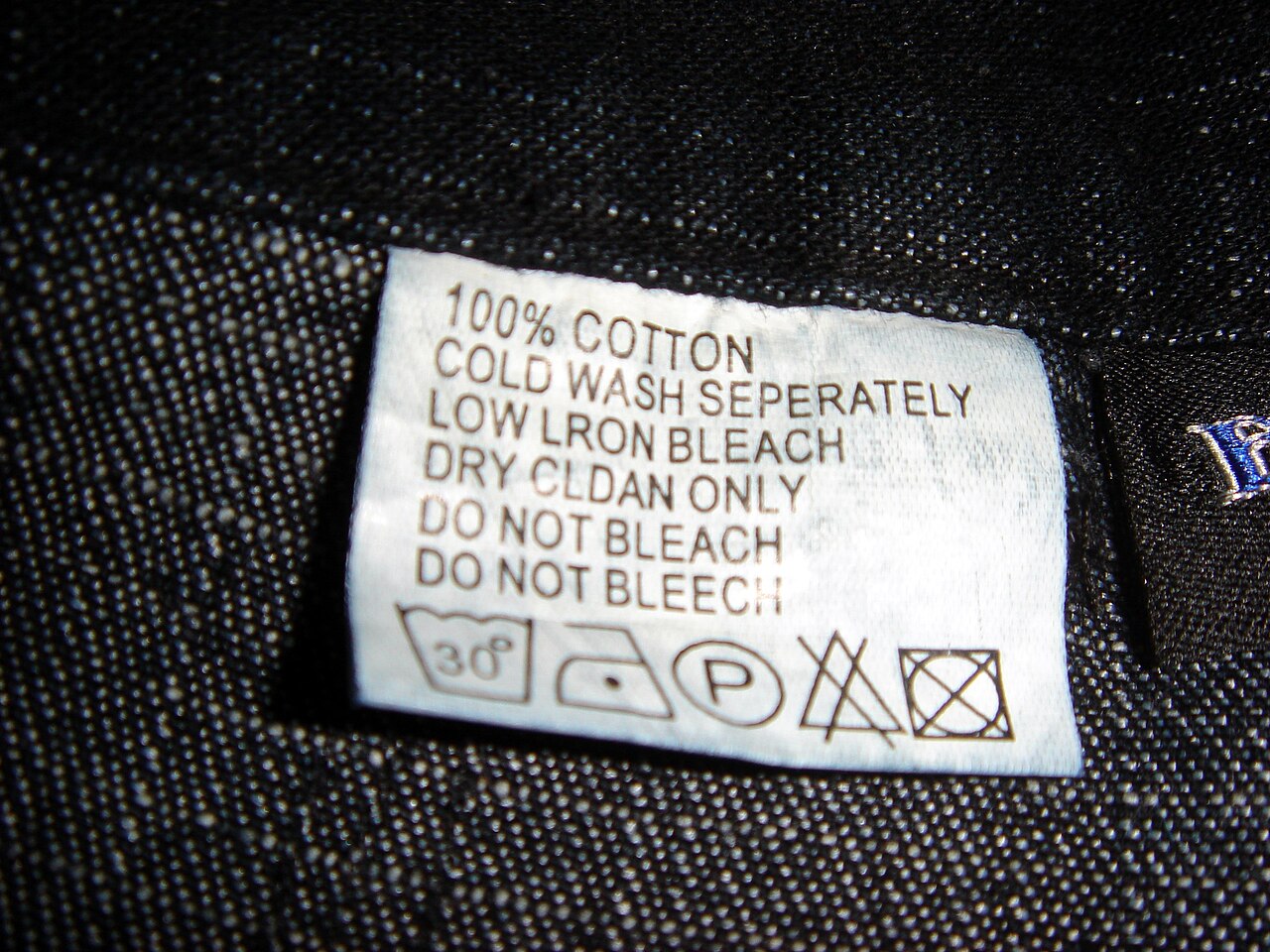
Labels first. A genuine garment carries several labels and they agree with each other. The brand label gives the name in the maker’s correct typeface, spacing and spelling, woven or cleanly printed, and sewn in straight. The care label gives fibre content, washing instructions and a country of origin, and the formal requirements behind such labels are set out in the trademark laws at USPTO and the labelling rules they sit alongside: fibre, origin and maker identity are not decoration, they are required information. Cross-check the story. A label claiming a premium line should not sit above a care label with misspelled instructions, a fibre mix the brand never used, or a country of origin the brand had left by the year the style was made. Fakes often get the big front logo nearly right and the small internal labels badly wrong, because the copyist spends money where photographs look and saves it where only owners look. Read the small labels first and the big logo last, and walk away from any garment whose labels disagree with each other, whatever the front of it promises.
Stitching and hardware come next, because they record how the garment was made rather than what it claims to be. On a genuine piece the stitching is even, dense and consistent: the same stitch length along a seam, threads that match or deliberately contrast in the brand’s known pattern, no loose ends, no wandering lines at the collar, cuffs and hem where sewing is hardest. Turn the garment inside out. Interiors are where production quality hides, and a fake that looks passable outside often shows skipped stitches, raw unfinished seams and cheap overlocking inside. Hardware should feel like it belongs to the price the brand charges: zips that run smoothly and carry the maker’s known puller, buttons and snaps with weight, clean backs and, where the brand engraves them, correct markings. Featherweight zips, plastic feeling buttons and mismatched replacements are not proof on their own, since owners repair old garments, but each one lowers the price you should pay and raises the standard the rest of the garment has to meet.
Print and logos are the last check, not the first, because they are what fakes invest in. Still, run it properly. A genuine screen print sits in or on the fabric the way the brand’s prints of that era did, with sharp edges, correct colours and spacing between letters that matches reference photographs of the real release. Warning signs are prints that feel like a thick plastic sheet on top of the cloth, crack when the fabric is gently stretched, blur at the edges of letters, or get small details wrong: a letterform slightly off, a graphic mirrored, a colour the original never used. Compare against the real thing before you buy, using the same reading skills our guide to streetwear graphics teaches for print families, placement and quality. One failed check can be damage or a repair. Two failed checks in different categories is a pattern, and a pattern means you put the garment back and keep the money for a piece that passes.
Buying Online Without Holding the Garment
Buying secondhand online means running the same authentication routine through a camera, and the skill is knowing which photographs carry evidence and which carry only atmosphere. A listing that can be checked shows the front, the back, the brand label, the care label, the hardware close up and any flaws, all in plain light. A listing that cannot be checked shows three moody angles of the garment being worn and a description full of confidence. Treat missing label photographs as a failed check rather than a neutral gap, and ask for them. A genuine seller with a genuine garment can photograph a label in ten seconds, and the refusal or inability to do so tells you what the photograph would have shown. The consumer advice collected in the BBB counterfeit goods tips points the same way: buy from sellers who stand behind what they sell, be wary of prices far below the going rate, and keep the transaction somewhere with a dispute route rather than moving it to an untraceable payment at the seller’s suggestion.
Measurements are the second half of the online routine, because a real garment in the wrong size is still the wrong garment. Never buy from the label size alone, and doubly never on old stock, where a labelled large from one decade measures like a medium from another. Ask for the garment measured flat: chest or waist across, length from shoulder or waistband, sleeve or inside leg, in centimetres. Compare those numbers against a garment you own that fits, measured the same way, not against a size chart for new clothing. A seller who measures carefully is also telling you something about how they grade condition, and a seller who will not measure is asking you to absorb a risk they could remove in a minute. Price that risk if you proceed at all, and prefer the listing with full measurements at a slightly higher price over the vague listing at a bargain one. The vague listing is only cheaper if it fits and is real, and it has given you no way to know either.
Finally, read the seller as carefully as the garment. A history of selling similar pieces, with feedback mentioning condition accuracy, is worth money. A brand new account listing one famous piece at half its sold price, with photographs that appear on other listings, is the standard counterfeit pattern, and image searching a listing photograph before paying takes a minute and settles it. Keep communication and payment inside the platform, save the listing and the photographs until the garment has arrived and passed your hands on checks, and open it promptly: your dispute window runs from delivery, not from the day you get around to inspecting the parcel. When the piece arrives, run the full routine from the previous section before removing any tags or washing it, because a garment you have altered is a garment you have accepted.
Condition, Fit and Sizing on Old Garments
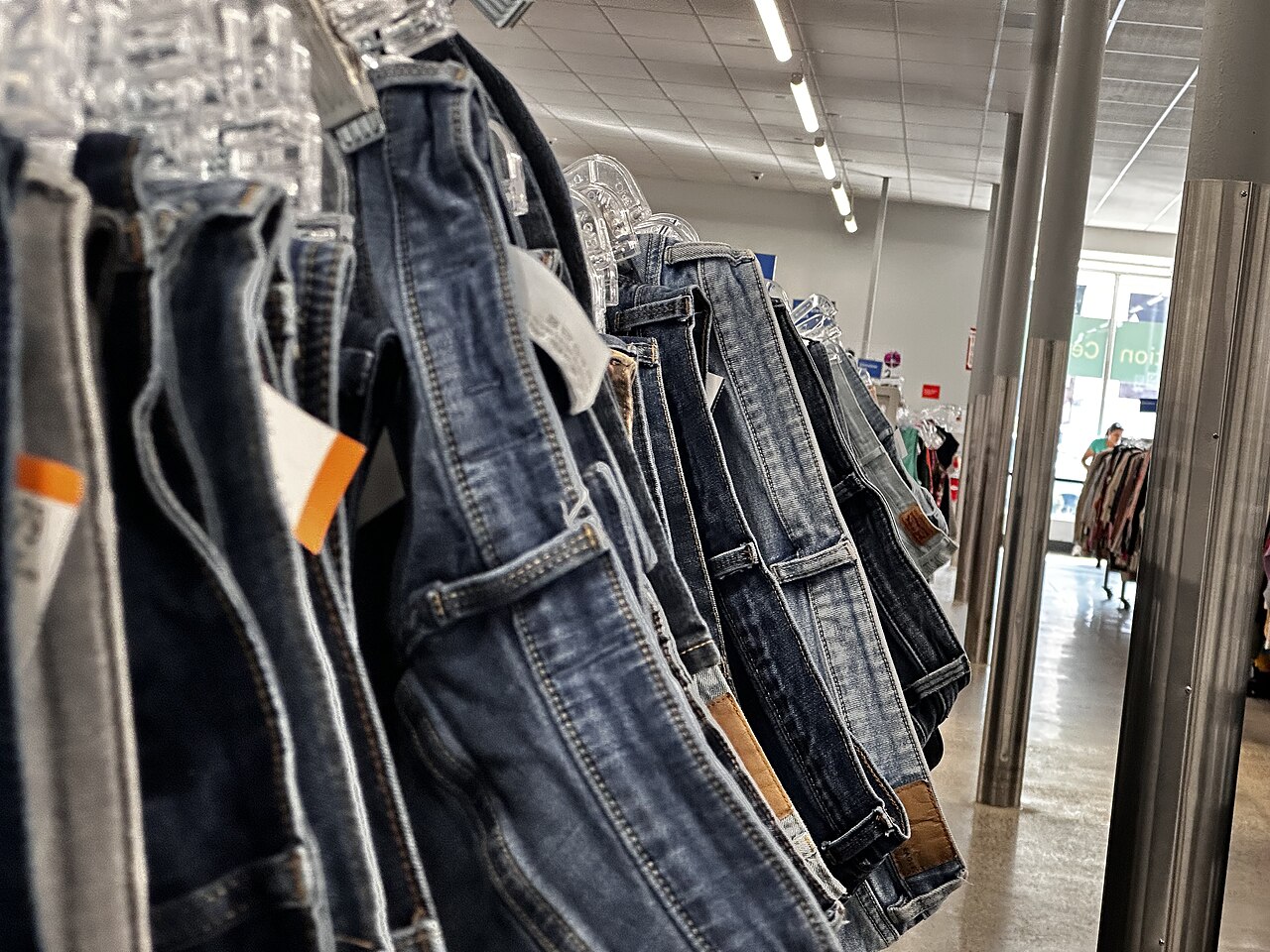
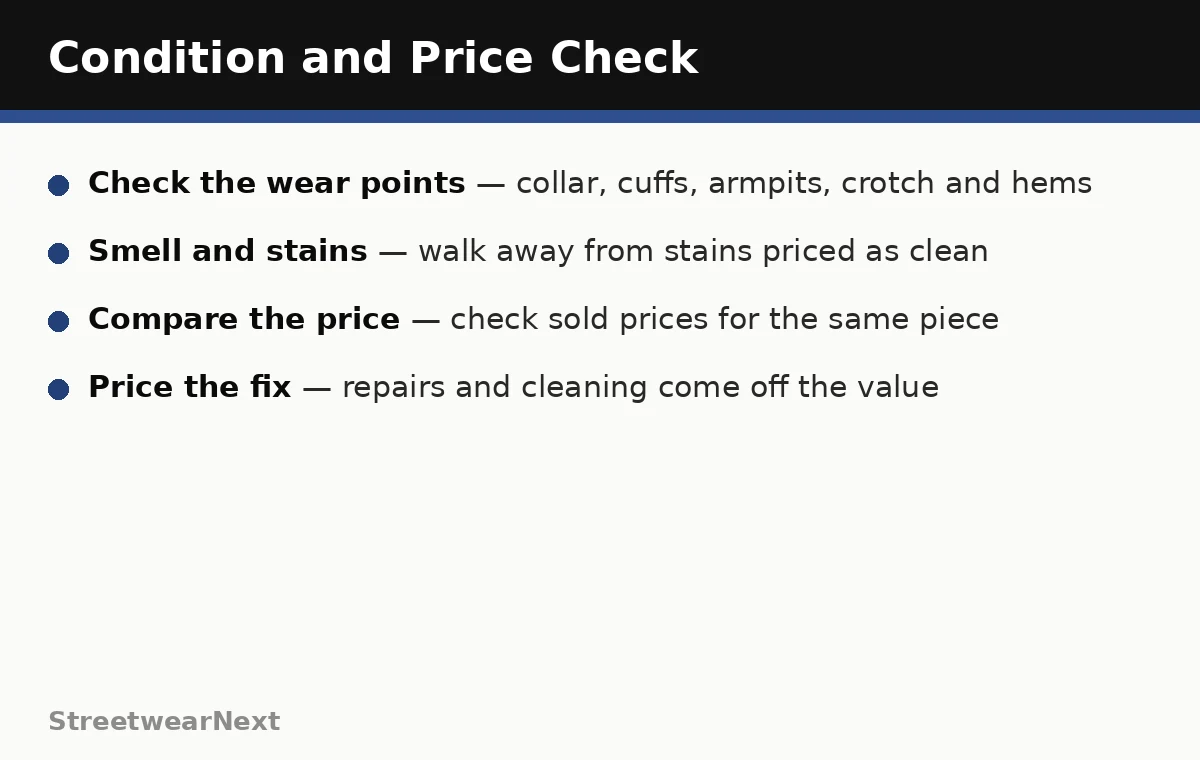
A genuine garment can still be a bad buy, and condition is where the second half of secondhand skill lives: reading wear the way a grader would, before the price is agreed. Work the wear points in order. Collars and cuffs thin and fray first on shirts, hoodies and jackets. Armpits stain and weaken. The seat, knees and inner thigh of trousers and jeans shine, thin and finally split, and elastic in waistbands, cuffs and socks dies quietly and completely, leaving a garment that measures right and wears wrong. Hold thin fabrics up to the light: pinholes and thinning show against light that hide completely on a rail. Smell the garment without embarrassment. Smoke, mildew and heavy fragrance used to cover both are condition facts, and mildew in particular survives ordinary washing and returns. Our guide to streetwear jeans covers denim wear in detail, and the same light test that finds thinning in a jean finds it in a tee.
Fit on old garments needs its own caution, because the size on the label describes the garment when it was new, in the sizing system of its maker and its decade. Vintage sizing runs smaller than modern sizing in most categories, some brands have changed their blocks repeatedly, and individual garments shrink, stretch or get altered across their lives. A previous owner may have tapered the legs, shortened the hem or taken in the waist, and a good alteration is a bonus while a bad one is a defect that no label will mention. Try the garment on whenever the channel allows it, sit and reach in it, and check the altered points: hem tape lines, mismatched thread on seams, waistband stitching in a second colour. Where trying on is impossible, the flat measurements from the online section are your defence in person too. Carry a tape. Serious secondhand buyers do, and a thirty second measurement has ended more bad purchases than any amount of squinting at a size label.
Grade honestly, in words you would accept as a buyer. Mint and deadstock mean unworn, and deadstock should still show its age in elastic and glue even if it was never worn. Excellent means worn lightly with no visible flaws. Good means visible wear that does not shorten the garment’s life. Fair means flaws that do: thinning, stains, repairs, dead elastic, missing buttons or a broken zip. The grade sets the price band in the next section, and the discipline is to grade the garment in front of you, not the garment in the listing photograph or the one you hoped to find. A famous label in fair condition is a fair condition garment with a famous label, and it should be priced, worn and enjoyed as exactly that.
Price: What a Fair Secondhand Price Looks Like
A fair secondhand price is not a feeling or a percentage of the original retail price; it is what the same piece, in the same condition, has actually been selling for. Build the number from sold listings, not asking prices. Asking prices record what sellers hope, and on hyped pieces they record pure optimism, sometimes for months. Sold prices on resale platforms, completed auction results and the price tags in shops that turn stock over quickly are the evidence. Find three to five sales of the same piece, adjust for condition using the grades from the previous section, and the middle of that range is the fair price. Pay below it when the garment needs work, at it when the garment is exactly as graded, and above it only when the piece is rare in your size and you have been hunting it long enough to know that from evidence rather than from the seller’s description of it.
Then subtract the cost of making the garment wearable. Cleaning, a replacement zip, a repaired seam, new drawstring cords or buttons, and postage on an online purchase all come out of the same budget as the price itself, and a cheap garment needing forty in repairs was never cheap. This is also where the accessories and finishing pieces in our guide to streetwear accessories enter secondhand maths: small branded accessories are faked heavily relative to their size, priced keenly because buyers check them less, and should be authenticated and priced with the same sold price discipline as a jacket. Finally, keep a simple record of what you paid and what sold prices said at the time. Secondhand buying skill compounds, and the buyer who can see six months of their own decisions, the bargains and the two mistakes, learns faster than the buyer working from memory, who remembers the bargains in detail and the mistakes hardly at all.
Mistakes That Cost Secondhand Buyers Money
Most secondhand losses come from a short list of repeated mistakes, and every one of them is a skipped step rather than bad luck. The first is buying the logo before the garment: falling for the famous front print and never turning the piece inside out, when the interior would have settled the question in seconds. The second is trusting the word vintage as a quality mark, when it is only an age claim, and an old garment can be as badly made as a new one. The third is paying a collector price for a wearer garment. A piece bought to be worn should be priced for its condition and remaining life, not for the best example of it that exists in a sealed bag somewhere. The fourth is ignoring the supply behind suspicious bargains: counterfeit stock enters countries in bulk, which is why the trade enforcement work of Customs and Border Protection includes seizing fake branded goods at the border, and why a market stall or listing with ten identical new looking copies of a discontinued piece at low prices is describing its own supply chain if you stop to listen.
The quieter mistakes are about process. Skipping the smell and light tests because the shop is busy. Buying a size you hope to become rather than the size you measured. Letting a seller rush you with another buyer who is supposedly on their way. Paying outside the platform to save a fee and losing the dispute route that was the fee’s entire purpose. Each one trades a minute of patience for a garment you cannot return and should not have bought. The fix is the routine itself, run whole, in order, every time, at a speed that improves with practice until it takes less time than the mistake would have cost. Secondhand rewards that temperament more than it rewards taste. Taste finds the rail. The routine decides what leaves on it, and over a year of buying, the routine is the difference between a wardrobe of genuine, well graded pieces bought below their sold prices and a cupboard of almosts. Keep the wider rotation in view while you hunt: the complete wardrobe frame in our guide to streetwear for men shows which pieces are worth hunting first, so the routine is spent on garments your outfits actually need.
Our View
Our view is that secondhand is the best classroom in streetwear, because it forces you to judge the garment itself rather than the marketing around it, and the buyer who can read a label, a seam and a sold price history will never be dependent on hype or on a seller’s confidence again. Run the routine, grade honestly, pay from evidence, and the used rail stops being a gamble and becomes the most reliable place in the market to build a wardrobe with a past and a future.
Buy the garment, not the story: labels that agree, stitching that holds, hardware with weight, and a price taken from what the piece actually sold for.
— Brian Ka
Frequently Asked Questions
How can I tell if a secondhand branded garment is fake?
Run four checks in order. The labels should agree with each other on brand, fibre, origin and era, with correct spelling and typefaces. The stitching should be even and consistent, inside as well as out. Hardware such as zips and buttons should feel solid and match the brand’s known fittings. The print should have sharp edges and correct spacing and colours. Two failed checks in different categories means walk away.
What does vintage actually mean for clothing?
Vintage means the garment was genuinely made in an earlier era, commonly twenty years old or more, and is characteristic of its period. It is an age claim that can be checked against label design, country of manufacture, fibre mixes and construction. Vintage style or vintage inspired means a newer garment made to look old, which is fine at the right price but is not vintage.
Is thrift store clothing ever fake?
Yes. Thrift stock arrives through donations with no authentication step, so counterfeit pieces appear on thrift rails alongside genuine ones, priced by category rather than by label. The low price is not evidence either way. Run the same label, stitching, hardware and print checks you would use in any other channel.
What photographs should I ask for when buying secondhand online?
Ask for the front and back in plain light, the brand label, the care label, a close up of zips or buttons, any flaws, and flat measurements in centimetres for chest or waist, length and sleeve or inside leg. A seller who cannot or will not photograph the labels has failed a check, and you should price that in or walk away.
How do I know if a secondhand price is fair?
Compare sold prices, not asking prices, for the same piece in the same condition grade, using three to five completed sales where you can find them. Take the middle of that range as fair, then subtract the cost of cleaning, repairs, missing parts and postage. A famous label in fair condition should be priced as a fair condition garment.
Questions About Building Your Wardrobe?
Trying to judge whether a secondhand find is genuine, or working out what a vintage piece is really worth? Send us your questions and we will point you in the right direction.
Sources
- Wikipedia — Counterfeit Consumer Goods
- Wikipedia — Trademark
- Wikipedia — Vintage Clothing
- Wikipedia — Thrift Store
- Wikipedia — Second-Hand Shop
- USPTO — Trademark Laws
- National IPR Center
- StopFakes.gov
- U.S. Customs and Border Protection — Trade
- EPA — Textiles: Material-Specific Data
- Better Business Bureau — Counterfeit Goods Tips