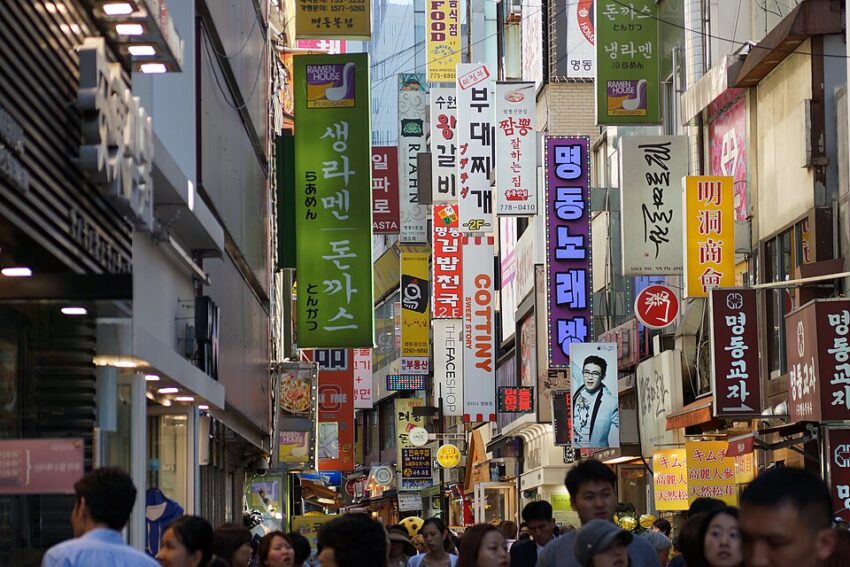
Buying Korean streetwear from outside Korea used to mean screenshots, forwarding services and guesswork, but it does not have to work that way anymore. Musinsa, the platform where most Korean labels actually sell, now runs an English-language global store that ships directly to the United States, and the brands worth your money — thisisneverthat, ADER error, Andersson Bell, Covernat, Marithé François Girbaud, Matin Kim and Musinsa’s own Musinsa Standard line — can be sorted into clear price tiers once you know what each one does best. This guide is deliberately practical rather than aesthetic: how Musinsa works, which brand to buy for which piece, what the price bands really buy you, how Korean sizing converts to US sizing, what shipping to the US costs and how long it takes, and how to build a first order that arrives fitting the way you expected.
Start Here
Key Takeaways
- Musinsa is Korea’s largest fashion platform and its Global Store ships to the US directly — no forwarding service is needed for the brands carried there.
- US shipping on Musinsa Global is $20 per order and free at $200 or more, with duties handled at checkout and average delivery of about 6–13 business days.
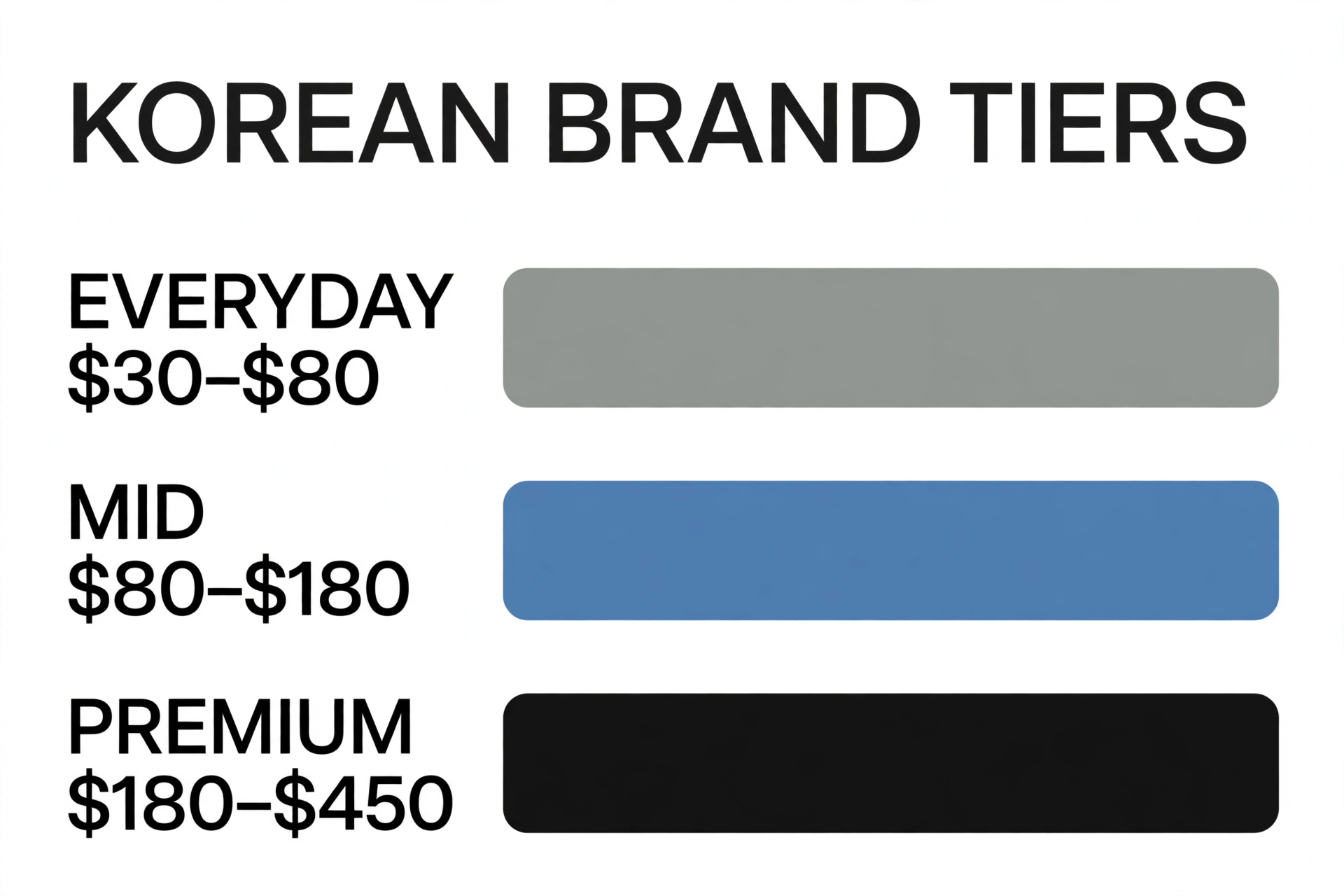
- Sort brands by tier before you shop: everyday labels around $30–$80, mid-tier labels around $80–$180, and premium designer labels around $180–$450 per key piece.
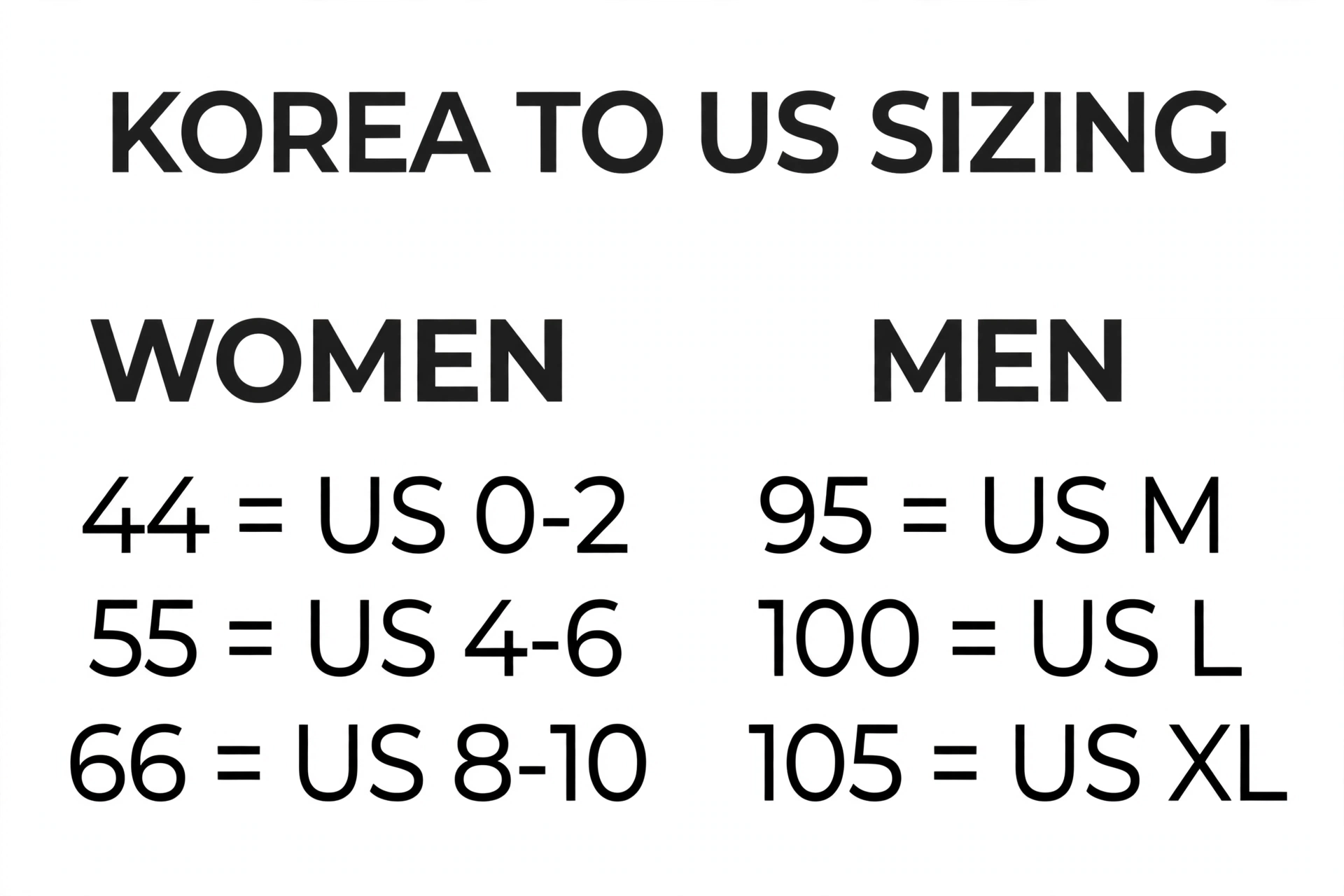
- Korean sizing runs smaller than US sizing. Women often meet the 44, 55 and 66 number system; men meet 95, 100 and 105, which track chest size in centimetres.
- Buy by piece, not by hype: thisisneverthat and Covernat for graphic staples, Matin Kim and Marithé for logo-led womenswear, Andersson Bell for knitwear and tailoring twists, ADER error for one statement piece.
- Always order from the centimetre measurements on the product page, not from the letter or number on the label — there is no single standard across Korean brands.
Contents
- How Musinsa Works: The Platform, the Global Store and Your Account
- The Brands Worth Knowing, Sorted by Price Tier
- Buying by Piece: Which Brand for Which Job
- Korean Sizing vs US Sizing: Read Centimetres, Not Labels
- Shipping to the US: Cost, Timing and Duties
- Building Your First Order Without Wasting Money
- Mistakes That Cost US Buyers Money — and How to Avoid Them
- Our View
- Frequently Asked Questions
- Sources
- Recommended
How Musinsa Works: The Platform, the Global Store and Your Account
Musinsa is best understood as the home market itself, not as one shop among many. The company’s own introduction, the Musinsa K-Fashion Edit, describes it as Korea’s largest fashion platform, built around thousands of Korean brands and aimed squarely at younger shoppers who buy streetwear and contemporary labels as everyday clothing. That scale is the practical point for a US buyer. When a Korean label trends at home, it trends on Musinsa first, because that is where Korean customers are actually checking prices, reviews and restocks. Shopping there is the closest equivalent to shopping the Seoul market itself, rather than shopping a small export selection chosen by someone else.
The history explains the trust the platform carries at home. As the Musinsa company history records, it began in 2001 as a sneaker community, opened its store in 2009 and launched the Global Store in 2022 to serve international markets including the United States. A community that became a store tends to keep community habits: heavy review culture, fit photos from real buyers, and rapid feedback when a product’s sizing or quality disappoints. For a buyer overseas, those Korean-language reviews are still useful even through translation, because the fit comments — whether a hoodie runs short, whether a knit stretches — are exactly the information a product page alone cannot give you.
The wider group structure matters when you see unfamiliar names at checkout. The overview on Musinsa’s service page sets out the family: the main store, the more curated 29CM platform, the soldout resale service and Musinsa Standard, the company’s own basics label. You do not need all of them. As a US buyer your working tools are two: the Global Store for direct shipping, and Musinsa Standard as a brand inside it when you want plain, well-priced staples. Treat everything else as background, and do not confuse the Korean domestic site with the global one — the domestic site assumes a Korean address and payment setup, while the global store is the route built for you.
| Tier | Typical Price Band | Brands in This Guide | Best First Purchase |
|---|---|---|---|
| Everyday | About $30–$80 | Musinsa Standard, Covernat | Plain hoodie, logo tee, cap, relaxed slacks |
| Mid | About $80–$180 | thisisneverthat, Matin Kim, Marithé François Girbaud | Graphic sweatshirt, logo knit, signature bag or wallet |
| Premium | About $180–$450 | Andersson Bell, ADER error | Knitwear, tailored jacket, one statement piece |
Setting up is simple but has one trap worth knowing before you order. You choose your shipping country on the global store and shop in that country’s storefront, and the range, prices and promotions can differ from the Korean site. An item you saw on social media may exist only on the domestic store, in which case no amount of refreshing will make it appear in the US storefront. Accept that boundary rather than working around it with unofficial routes on a first order. If you want the broader context of how these labels fit into the overall look before you spend, our complete guide to Korean streetwear style covers the aesthetic side; this guide stays on the buying side, where the decisions are about tiers, sizes and shipping.
The Brands Worth Knowing, Sorted by Price Tier
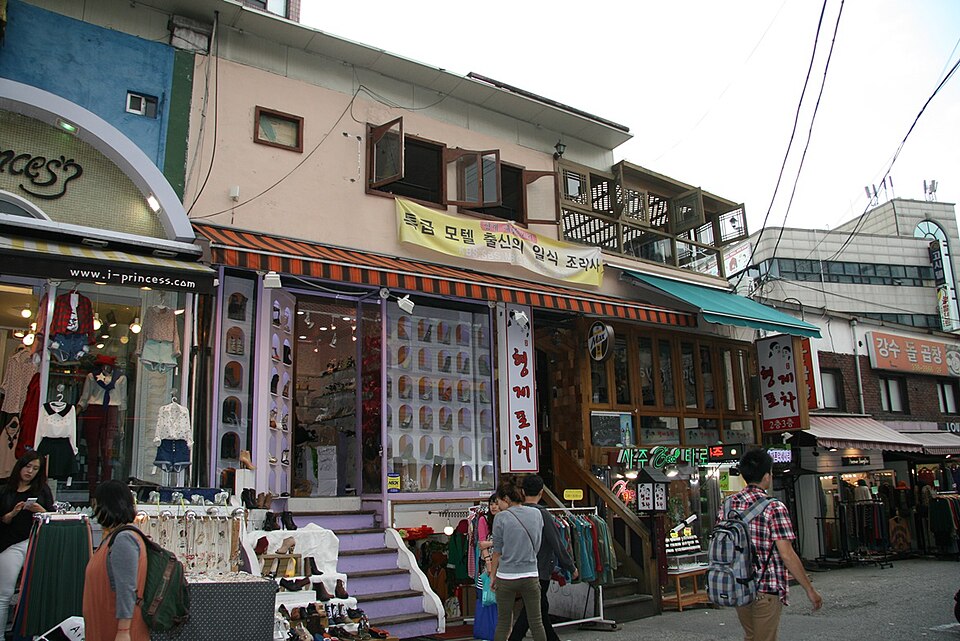
Start with the everyday tier, because that is where Korean streetwear earns its reputation for value. Musinsa Standard is the platform’s own label: plain tees, slacks, knits and outerwear basics designed to be bought repeatedly rather than collected. Covernat sits beside it with a collegiate, outdoor-leaning casual range — sweatshirts, caps and relaxed layers that read clean rather than loud. Round-ups of the scene, including this guide to Korean brands and where to buy them, consistently place these two at the accessible end of the market, and that placement is the useful signal: if your goal is a wearable Korean wardrobe rather than a single trophy piece, this tier is where most of your order should come from.
The mid tier is where logos and graphics start doing the work. thisisneverthat, founded in Seoul in 2010, is the default Korean streetwear name: graphic tees, hoodies and outerwear rooted in skate and youth culture, priced above basics but well below designer labels. Matin Kim and Marithé François Girbaud dominate the women’s side of this tier — Matin Kim with logo tops, cropped jackets and its much-copied metal-plate wallets and bags, Marithé with the classic logo sweatshirts and tees that became a uniform for young Korean women after the French label’s Korean revival. If you are shopping the looks in our guide to Korean street style for women, this tier is where most of those logo-led pieces actually come from.
The premium tier asks for a different mindset: buy one piece, not a basket. ADER error, the Seoul collective founded in 2014, builds oversized, deliberately off-kilter pieces — a seam in the wrong place, a label where no label should be — and prices them as design objects. The ADER error brand history shows how quickly those ideas travelled through collaborations with global sportswear and fashion names. Andersson Bell works the other side of premium: Scandinavian restraint cut with Korean colour and patchwork, strongest in knitwear and in classic shapes given one unexpected twist. Fashion-press surveys such as Highsnobiety’s best Korean brands list and Highsnobiety’s Seoul brands guide return to both labels for the same reason — they are the Korean names a buyer who already owns good basics graduates to.
A second opinion is worth having before premium money moves. The SSENSE guide to Korean brands profiles more than thirty labels and describes ADER error’s collective of designers, illustrators and architects, and Andersson Bell’s habit of subverting classic shapes with neon palettes and patchwork — independent confirmation that the design claims are real and not just storefront copy. Use that kind of guide the way you would use a fitting room: to check whether a label’s story matches the piece in your basket. Men building from the same tiers will find the pairings worked through in our guide to Korean streetwear for men and the wider market context in streetwear brands for men.
Buying by Piece: Which Brand for Which Job
The fastest way to waste money on Musinsa is to shop by brand loyalty; the reliable way is to shop by piece. For graphic tees and hoodies, thisisneverthat is the first stop: the graphics are the point, the cuts are the relaxed Korean block, and the price lets you buy two rather than agonising over one. Covernat is the alternative when you want the same categories quieter — a small logo, a collegiate feel, nothing that shouts. For plain staples with no branding at all, Musinsa Standard wins on price per wear, and its slacks and basic knits are the pieces Korean buyers themselves reorder. Our checklist of streetwear essentials maps neatly onto this tier: build the plain foundation first, then let one branded piece sit on top of it.
For logo-led womenswear, split the job between Matin Kim and Marithé rather than choosing a side. Matin Kim is stronger on structured pieces — cropped jackets, knit tops, and the bags and wallets that made the label famous — while Marithé is stronger on the soft classics: sweatshirts, tees and knits carrying the Paris-style logo. Both are designed primarily for women, and some pieces are unisex in practice, but men should read the garment measurements with extra care rather than assuming a shared fit. If logos are the whole reason you are shopping, our breakdown of streetwear logos explains which marks hold their value in an outfit and which date quickly, and our guide to streetwear graphics does the same job for printed pieces.
Knitwear and cold-weather pieces are where the premium tier justifies itself. Andersson Bell’s knits carry the colour blocking and patchwork the label is known for, and they layer over the plain bases from the everyday tier without competing with them. ADER error is the statement purchase: one oversized jacket, knit or graphic piece worn with otherwise quiet clothes. Buying a full ADER outfit is both expensive and visually exhausting; buying one piece is how the label is actually worn in Seoul. Cold-weather shoppers should also read our guide to Korean streetwear in winter before ordering padded jackets and heavy knits, because Korean winter cuts assume layering underneath, which changes the size you should choose.
Accessories are the low-risk entry point to the whole market. Caps from Covernat or thisisneverthat, a Matin Kim wallet or small bag, or a Marithé logo cap let you test the ordering route, the sizing system and the delivery timeline for the price of one item. That test order matters more than it sounds: it teaches you how the global store communicates, how tracking updates, and how the packaging and labelling look, before you commit to a jacket. Browse widely for ideas — our streetwear inspiration pages are built for that — but let the first real purchase be small, measurable and easy to learn from.

Korean Sizing vs US Sizing: Read Centimetres, Not Labels
Korean sizing is the single biggest cause of disappointing orders, and it is entirely avoidable once you know the three systems you will meet. The first is the women’s number system — 44, 55, 66, 77 — which still appears on Korean labels and confuses almost every first-time buyer. The second is the men’s number system — 95, 100, 105, 110 — which is friendlier because the number tracks chest circumference in centimetres. The third is the letter system, S, M and L, which looks familiar and is therefore the most dangerous, because a Korean M is cut smaller than a US M. A detailed walkthrough in this Korean sizing conversion guide gives the working rule plainly: Korean sizes typically run one to two sizes smaller than US standards, and shoe sizes are given in millimetres.
For women, the conversions most charts agree on are these: a Korean 44 sits around a US 0–2, a 55 around a US 4–6, and a 66 around a US 8–10, with 77 and 88 continuing upward from there. Treat those as a starting point, not a promise. A second, measurement-led reference, HaniSeoul’s Korean size chart, makes the same point from the men’s side: 95 corresponds broadly to a US medium, 100 to a large and 105 to an extra large, while stressing that the international label beside the number varies by brand. When two honest charts differ slightly, the lesson is not that one is wrong — it is that the number alone was never the real information. The garment measurements are.
So build a habit that survives every brand: measure a garment you already own that fits the way you want, in centimetres, across the chest, at the waist and along the length, then compare those numbers with the flat measurements on the product page. Korean product pages are unusually good at publishing these figures, which is a genuine advantage of shopping this market — the data exists, and the buyers who use it rarely miss. Pay special attention to length and shoulder width, because those are where Korean cuts differ most from US cuts even when the chest matches. An oversized Korean hoodie is oversized in a Korean frame of reference; if you are tall, the body length, not the chest, is the measurement that will decide whether it works.
Two labels deserve specific warnings. The first is Free Size, the one-size designation common on Korean womenswear. Free Size is not one-size-fits-all; it is one size, cut for a relatively narrow range, and if the product page gives no measurements for it, that absence is your answer — skip it or accept the gamble knowingly. The second is any piece described as a Korean-market exclusive fit, which sometimes signals a slimmer cut than the same brand’s export line. Neither warning should scare you off the market. They simply move sizing from a guess to a measurement exercise, and measurement exercises have right answers.
Shipping to the US: Cost, Timing and Duties
Shipping is where a Musinsa order is won or lost economically, because the fee is per order, not per item. The platform’s own notice, Musinsa’s US shipping fee update, states the current terms directly: US orders under $200 pay a $20 shipping fee, and orders over $200 ship free. The arithmetic changes how you should shop. Two separate $100 orders cost $40 in shipping between them; the same clothes in one $200 order cost nothing to ship. Consolidating into fewer, larger orders is not a minor optimisation on this platform — it is the difference between shipping adding a fifth to your spend and shipping adding nothing at all.
Timing needs the same realism. The help centre’s guidance on how long delivery takes puts US delivery at roughly 6–13 business days, up to 16, counted from order completion, with the journey split between preparation and consolidation at the Korean hub and the international leg that follows. US orders land through California, so East Coast buyers should expect the slower end of the range. None of this is slow by cross-border standards, but it is not domestic delivery either: order for the season you are entering, not the weekend you are in, and treat pre-order items as their own timeline, since they ship by the date on the product page rather than by the standard clock.
Duties are the third leg, and the one buyers most often misunderstand. Musinsa Global sells on a delivered-duty-paid basis, meaning taxes and duties are calculated and charged at checkout rather than demanded at your door — the amount you pay on the site is the amount the order costs. That structure matters more than it used to, because the old assumption that small overseas parcels simply arrive untaxed no longer holds for US shoppers. Budget on the checkout total, not the item total, and you will never be surprised. If a piece is also sold by a US or international stockist, compare the full landed cost on both routes; sometimes the stockist wins on a single premium item, and sometimes Musinsa wins easily once your basket passes the free-shipping line.
Returns deserve one honest paragraph. Cross-border returns are slower and more rule-bound than domestic ones everywhere, and Musinsa is no exception: read the return conditions on the global store before ordering, keep packaging until you have tried everything on, and check fit immediately rather than at the end of the month. This is the practical reason the earlier advice in this guide is ordered the way it is — accessories first, measured staples second, premium statements last. Each step lowers the chance that your first experience of the returns process involves the most expensive item you own.
Building Your First Order Without Wasting Money
A good first Musinsa order has a shape: one test accessory, two or three everyday pieces you measured carefully, and nothing premium. The accessory proves the route. The everyday pieces — a Musinsa Standard staple, a Covernat sweatshirt, a thisisneverthat tee — prove your sizing against three different labels at prices where a miss is annoying rather than painful. Together they should be planned as one basket that clears the free-shipping threshold if your budget allows, because paying $20 to ship a single cap teaches you the route at the worst possible exchange rate. Write down, for each piece, the centimetre measurements you ordered against. That small record becomes your personal size chart for every Korean brand, and it is worth more than any generic conversion table, including the one in this guide.
Your second order is where the mid tier earns its place. With your measurements proven, a Matin Kim knit or bag, a Marithé sweatshirt or a thisisneverthat hoodie can be bought with real confidence, and you can begin using the platform’s rhythm — seasonal drops, sale periods and restocks — rather than buying everything at full price on first sight. Korean retail discounts aggressively at season’s end, and the global store carries much of that rhythm with it. Patience is a pricing strategy here: a piece that is full price in its launch week is very often reduced once the season turns, and the buyers who track two or three labels closely do better than buyers who graze across twenty.
Premium pieces come third, and only with a job to do. An Andersson Bell knit that fills the colour gap in your wardrobe, or a single ADER error piece that becomes the focal point of plain outfits, will be worn constantly. A premium piece bought because the label excited you for an evening will not. If you are also following Korean fashion through a style lens — how these labels are worn at home and by older, more polished dressers — our sister site’s coverage at Gangnam USA, linked in the card at the top of this guide, is a useful companion read. The buying discipline stays the same at every age: measure, consolidate, and let each tier do the job it is priced for.
Mistakes That Cost US Buyers Money — and How to Avoid Them
Most Musinsa disappointments are not quality problems; they are process problems, and they repeat in predictable patterns. The first is ordering your US size by letter and discovering the Korean cut a week later. The second is splitting purchases across several small orders and paying the shipping fee again and again. The third is falling for a piece seen on the Korean domestic site or on social media without checking whether the global store carries it — and then blaming the platform when a workaround route delivers the wrong item, the wrong size or no support. The fourth is ignoring the review photos, which on this platform are unusually informative about real fit on real bodies.
The fifth mistake is treating every Korean label as interchangeable. A thisisneverthat hoodie, a Matin Kim knit and an ADER error jacket are three different products at three different prices solving three different problems, and the tier table in this guide exists to keep them separate in your mind while you shop. The sixth is buying Free Size womenswear without measurements. The seventh is leaving fit checks until the return window is nearly closed. None of these require talent to avoid — only the order of operations this guide has laid out: choose the tier, choose the piece, measure in centimetres, consolidate the basket, and check the fit the day the box arrives.
There is also a quieter mistake worth naming: assuming that because a brand is famous, its most famous piece is the right piece for you. Matin Kim’s wallets travelled further than its jackets; ADER error’s reputation rests on pieces many buyers would find difficult to wear weekly; thisisneverthat sells far more plain logo staples than dramatic graphics. Buy the version of the brand that fits your actual week. The Korean market rewards that realism, because it is built for people who wear these clothes daily — and a wardrobe bought on that basis is the one that makes a second order feel easy rather than experimental.
Our View
Our view is that Musinsa is the most honest way for a US buyer to shop Korean streetwear, because it is the market Koreans themselves use — real prices, real reviews, real sizing data, and a global store that has removed the forwarding-service friction without removing the need for care. The brands sort cleanly once you stop treating them as a single trend: Musinsa Standard and Covernat for the foundation, thisisneverthat, Matin Kim and Marithé for the recognisable mid-tier pieces, Andersson Bell and ADER error for the one premium piece that earns its place. Measure in centimetres, consolidate past the free-shipping line, and let your first order teach you the system. Do that, and Korean streetwear stops being a gamble conducted in another language and becomes what it should be — a well-priced wardrobe you chose on purpose.
Shop the market the way Seoul shops it: by tier, by piece and by the centimetre — never by the hype of the week.
— Brian Ka
Frequently Asked Questions
Does Musinsa ship to the United States?
Yes. The Musinsa Global Store ships directly to the US, so no forwarding service is needed for brands carried there. Shipping is $20 per order under $200 and free at $200 or more, with average delivery of about 6–13 business days and duties charged at checkout rather than on delivery.
Which Korean streetwear brand should a beginner buy first?
Start with the everyday tier: Musinsa Standard for plain staples and Covernat for quiet logo casualwear, or thisisneverthat if you want a recognisable graphic piece. Prove your sizing on those prices before buying Matin Kim, Marithé, Andersson Bell or ADER error.
How does Korean sizing convert to US sizing?
For women, 44 is roughly US 0–2, 55 is roughly US 4–6 and 66 is roughly US 8–10. For men, the number tracks chest size in centimetres, with 95 around a US medium, 100 around a large and 105 around an extra large. Brands vary, so always confirm against the centimetre garment measurements on the product page.
Is Marithé François Girbaud a Korean brand?
The label began in France in 1972, but its modern popularity is a Korean story: a Korean company acquired the local licensing rights in 2019 and rebuilt it for a new generation, which is why its logo sweatshirts and tees are now staples of Korean street style and sold through Korean platforms.
Why is the same item cheaper on the Korean Musinsa site?
The domestic and global stores are different storefronts with different pricing, promotions and ranges. The global store’s price includes the cost of serving international customers, and its checkout total includes duties. Compare the full landed cost, including shipping, before deciding which route is genuinely cheaper for your basket.
Questions About Buying Korean Streetwear?
Tell us which brand and piece you are considering and the measurements you are working from — sizing and tier advice is always specific to the item.
Sources
- Musinsa — The K-Fashion Edit
- Musinsa — Our Service
- Musinsa Global Help Center — US shipping fees
- Musinsa Global Help Center — Delivery times
- Highsnobiety — The Best Korean Brands
- Highsnobiety — Seoul Fashion Brands
- SSENSE — The SSENSE Guide to Korean Fashion Brands
- Wikipedia — Musinsa
- Wikipedia — ADERERROR
- Korea Experience — Korean clothing sizes conversion chart
- HaniSeoul — Korean clothing size chart
- K-Korea — Korean fashion brands and where to buy them